
This article contains affiliate links. If you book through them, this site may earn a commission at no extra cost to you. Our ratings are based on our own stays and on primary sources, whether or not a link is involved.
Language: English | 日本語
In July 2026, six of us across three generations (four adults, a first-year junior high student and a fifth-grader) spent four days and three nights in Taipei, including my wife’s parents. This is the itinerary exactly as we did it, in the order we did it, with the times.
What was hard about a trip with grandparents and kids was not choosing where to go but how to build each day. If you simply line up the sights the way typical model courses do, you cannot move that way in real life.
People of different ages have different stamina, so even at the same place, satisfaction changes with when you leave and when you come back. That is why this is not a neat sightseeing plan. It is a record of when we left, where we rested and when we got back.
The key points of these four days
- July 24–27, 2026 / six people, 3 nights and 4 days / no rain on any of the four days
- Our base was Cosmos Hotel Taipei, directly connected to Taipei Main Station, a location where “go back to the hotel for a rest at midday” actually works
- We landed at 23:55 at night, and had booked an airport transfer in advance
- We skipped Jiufen and went to the Taipei Zoo instead (my wife’s parents had already been to Jiufen on a package tour)
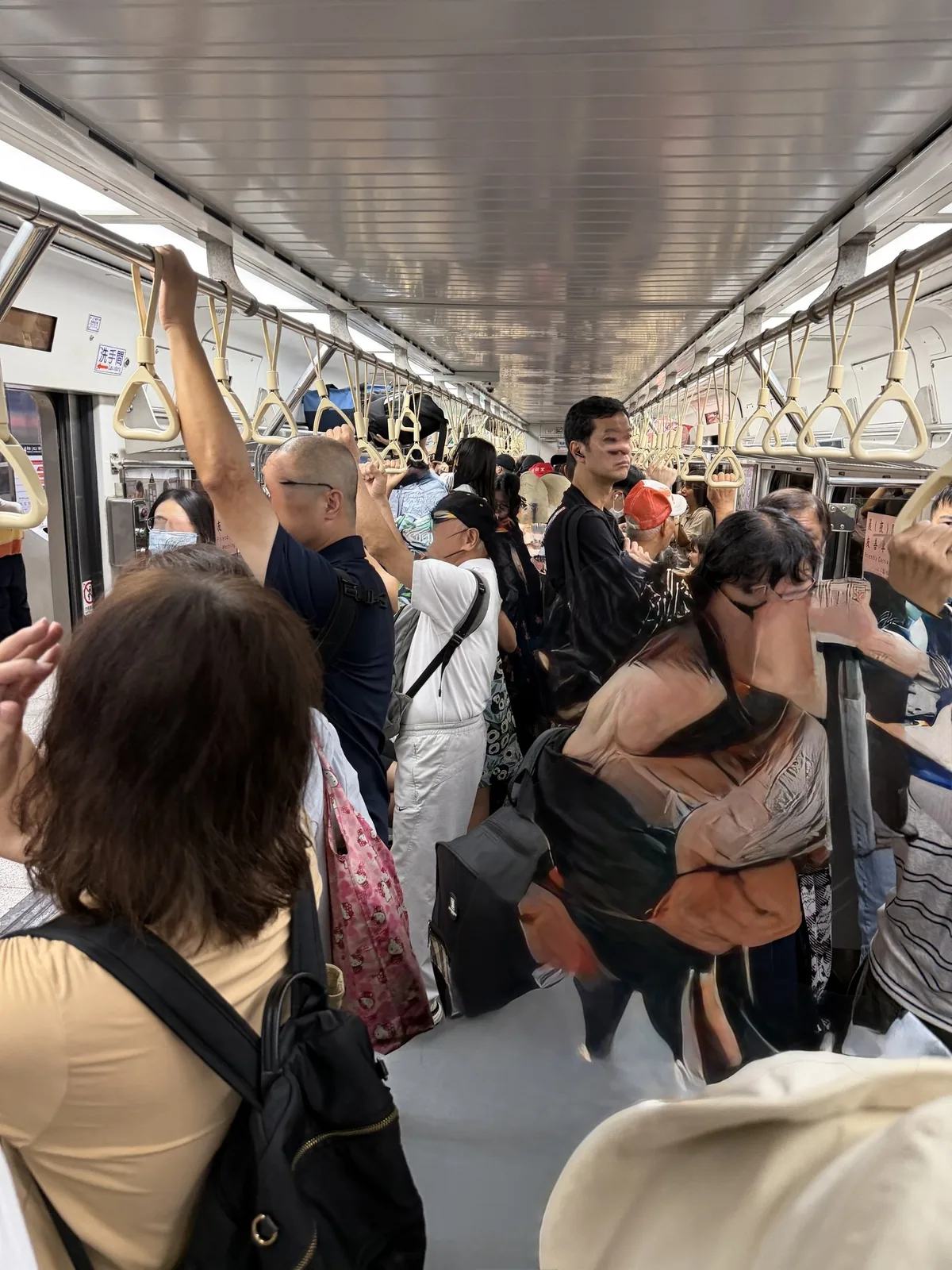
- Our biggest mistake was making the grandparents stand on a crowded train and bus. We should not have been stingy about getting around
The cost breakdown (about JPY 597,000 for six people) is in our Taipei 3-night, 4-day cost article (in Japanese), and the hotel details are in our Cosmos Hotel Taipei review. This article is only the itinerary.
Day 1: Landing at 23:55 and getting to the hotel
We left Narita at 21:15 and landed at Taoyuan International Airport at 23:55. Immigration and baggage claim took an hour, and we came out into the arrivals hall at about 1:00. We got into the hotel close to 2:00.
Leaving Narita at 21:15 and landing at Taoyuan at 23:55 is what decided the schedule of this whole trip.
Arrival and departure times change how many days you can use
We landed at 23:55 and flew home at 15:30. If you can get a flight that lands in the morning, you can use the whole first day. We were able to book the late-night flight cheaply, and spent the savings on the hotel and meals. Compare the outbound and return times before you decide.
Affiliate links. Booking through this site does not change the price. The cost breakdown is in our Taipei 3-night, 4-day cost article (in Japanese).
All we did that day was travel, but I think this is where a three-generation trip is most likely to trip up. You do not want to start by looking for a car late at night with elderly parents and children.
We booked a nine-seat van transfer through KKday in advance: JPY 6,407, with 90 minutes of free waiting time.
There was the option of hailing a car with a ride-hailing app on arrival, but with the conditions of late at night, six people and three suitcases, the real value was not having to worry at the airport about whether a car would come or whether the luggage would fit.
Late arrival, big group: book the airport transfer first
We used KKday. We booked the economy nine-seater (up to 7 people and 8 pieces of luggage) 19 days ahead, and cancellation was free until 3 days before.
Affiliate link.
Day 2: Shifen lanterns, the zoo’s pandas, and the grandparents heading back first
We set out at 10:30, after breakfast. With three generations, it works better not to rush this part. We had gotten in at about 2:00 the night before, so we ate breakfast slowly and got ready in the room before leaving.
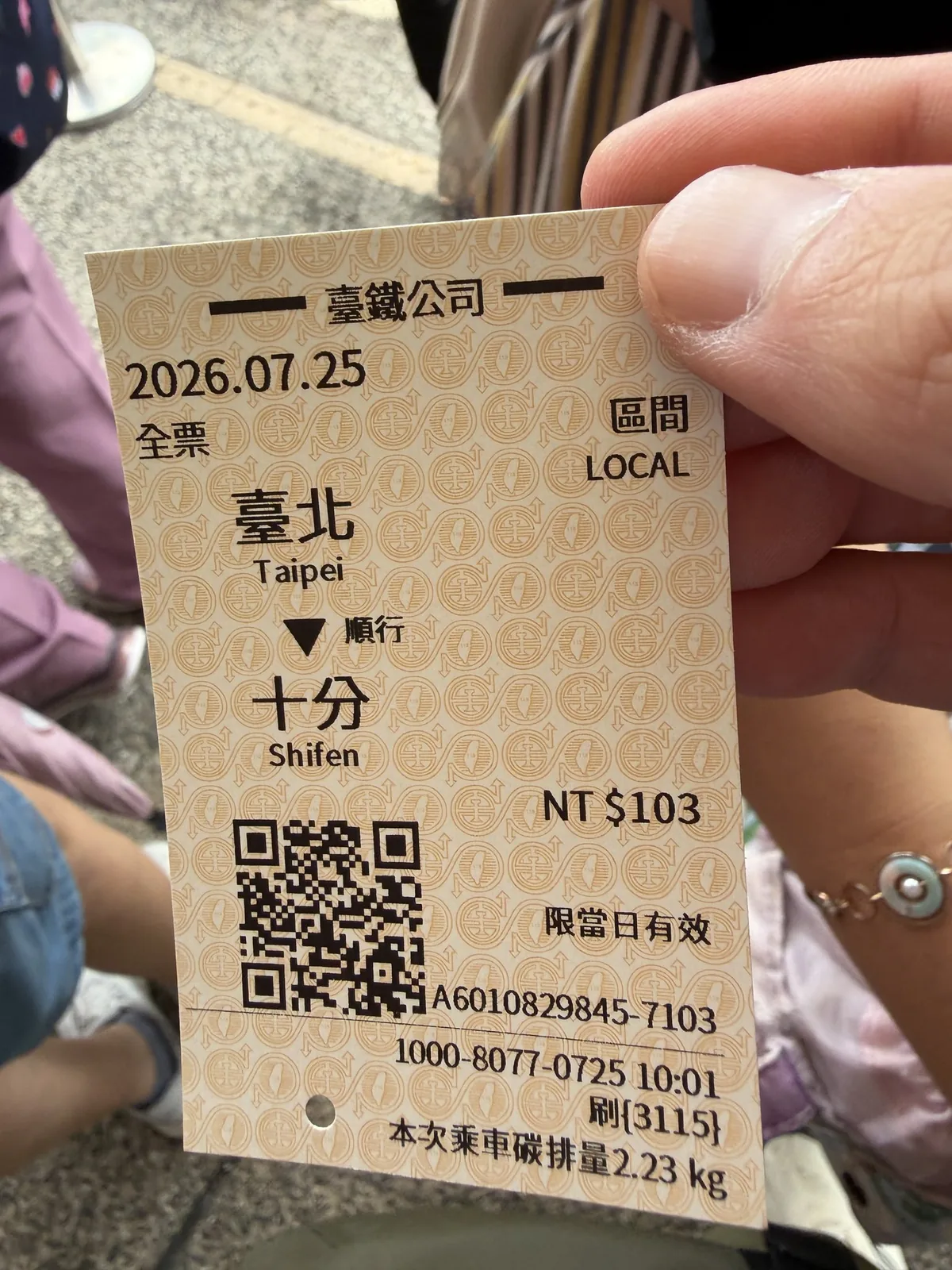
11:53 Releasing a lantern at Shifen
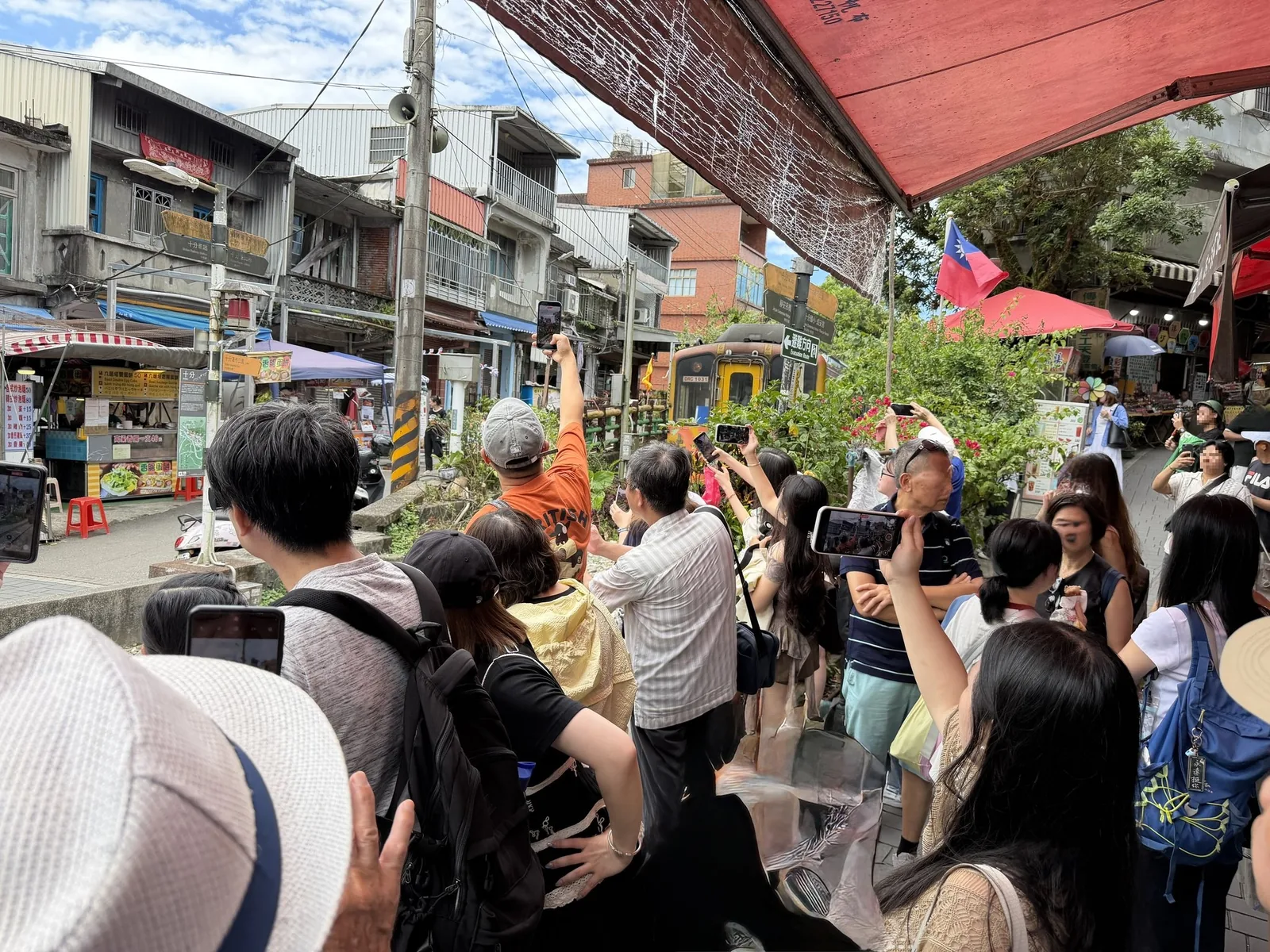
We took the train to Shifen. On the Pingxi Line on a Saturday we could not get seats. Other passengers gave up seats for the grandparents, so they sat. The ones standing were us adults.
When we came as a family of four, it was a weekday and earlier in the day, so there were hardly any people. Next time I would take a taxi.
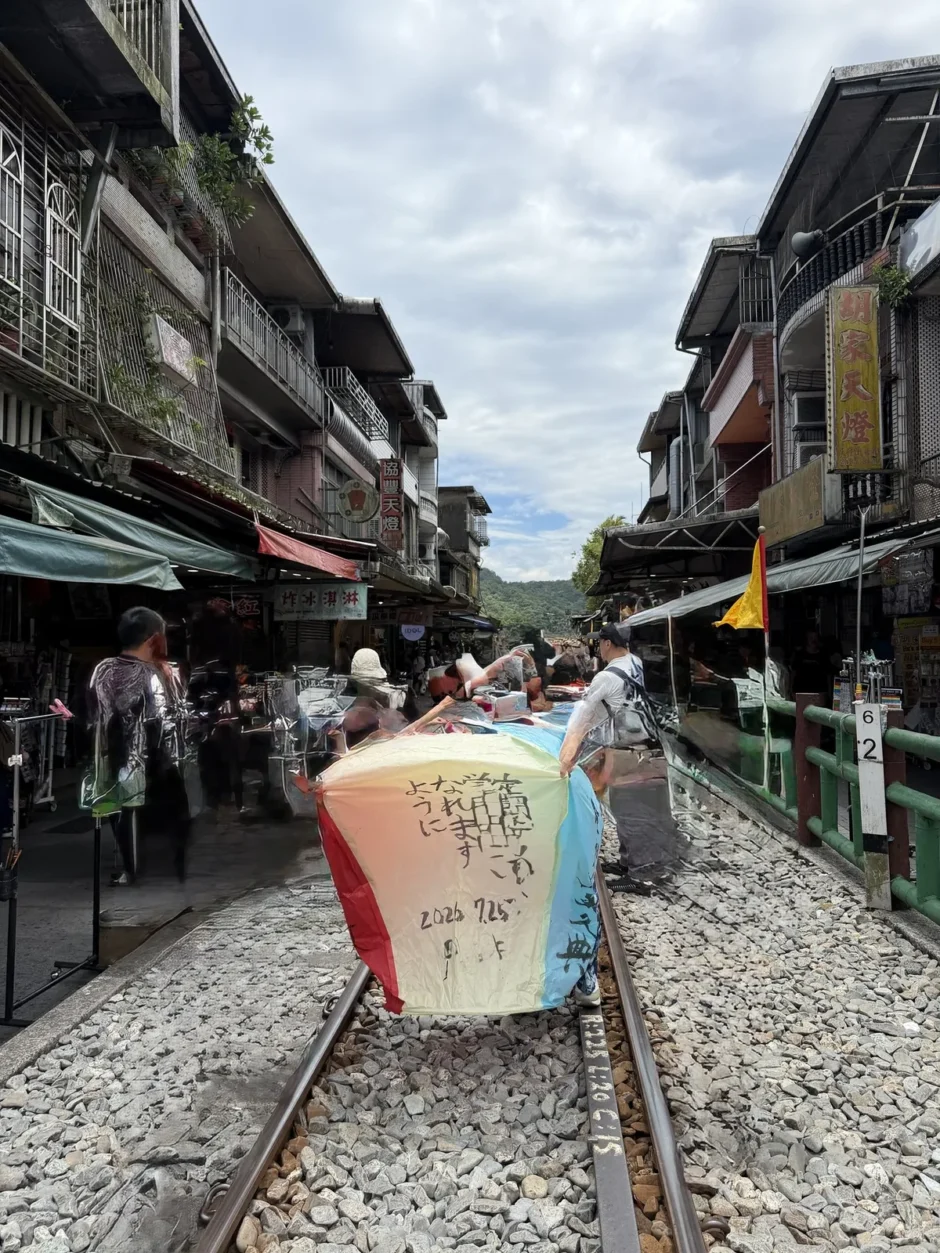
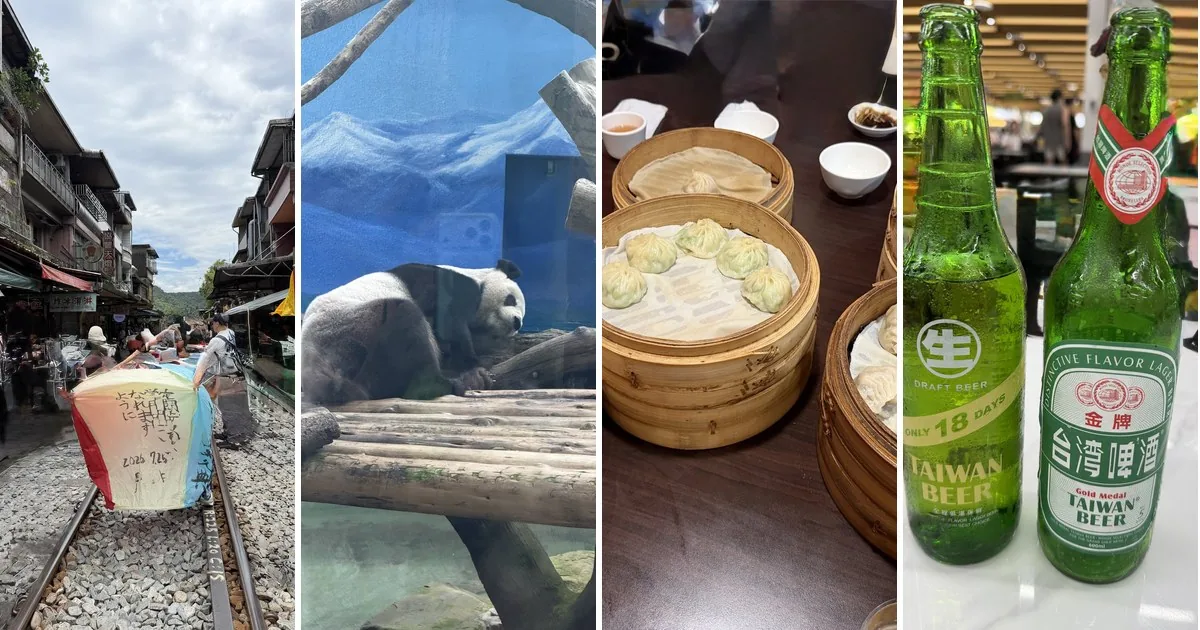
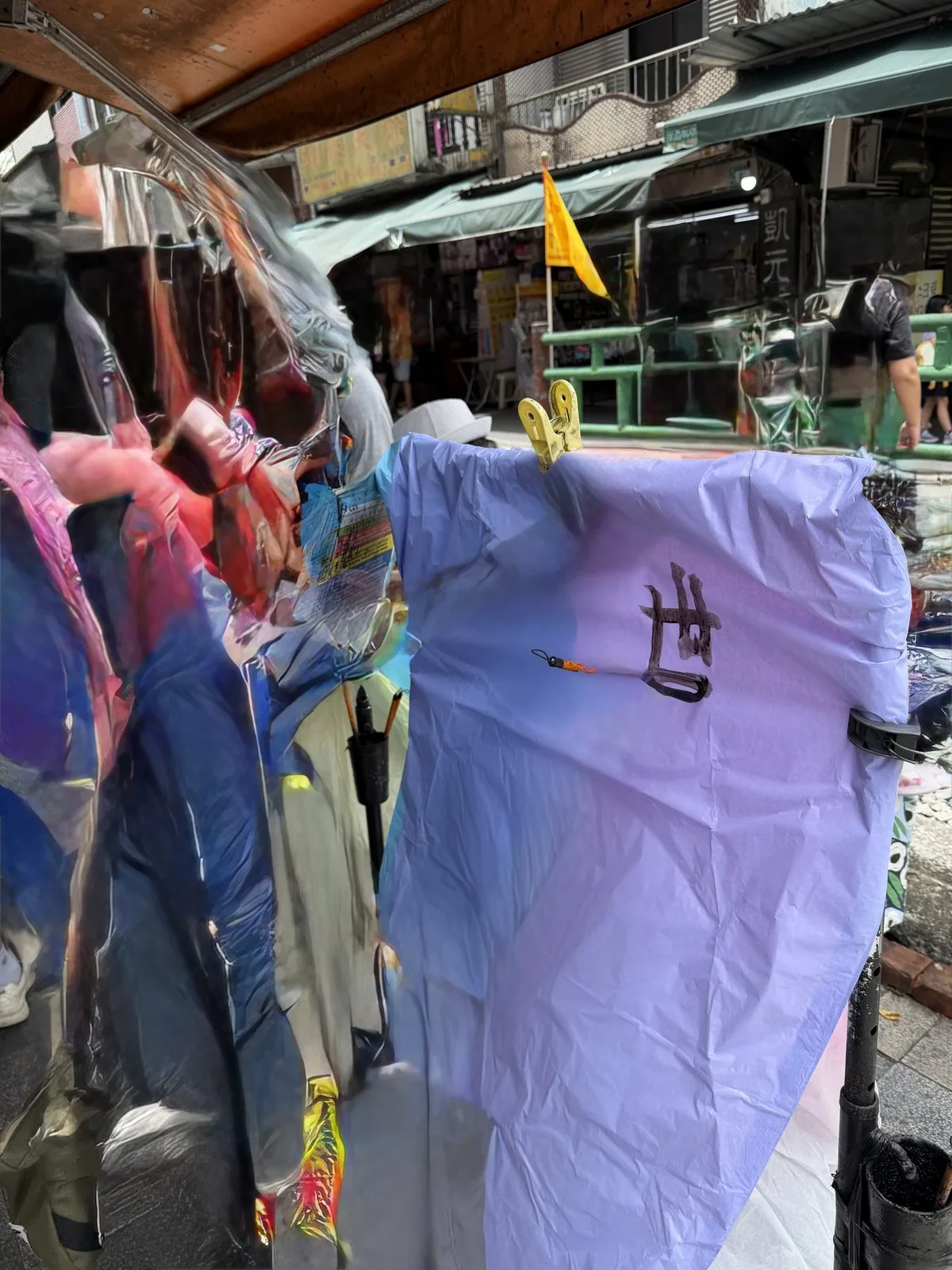
On the tracks we released two lanterns. One was for the grandparents and the two grandchildren, four people, and the other was for the four of us. Both times, the grandchildren wrote the wishes.
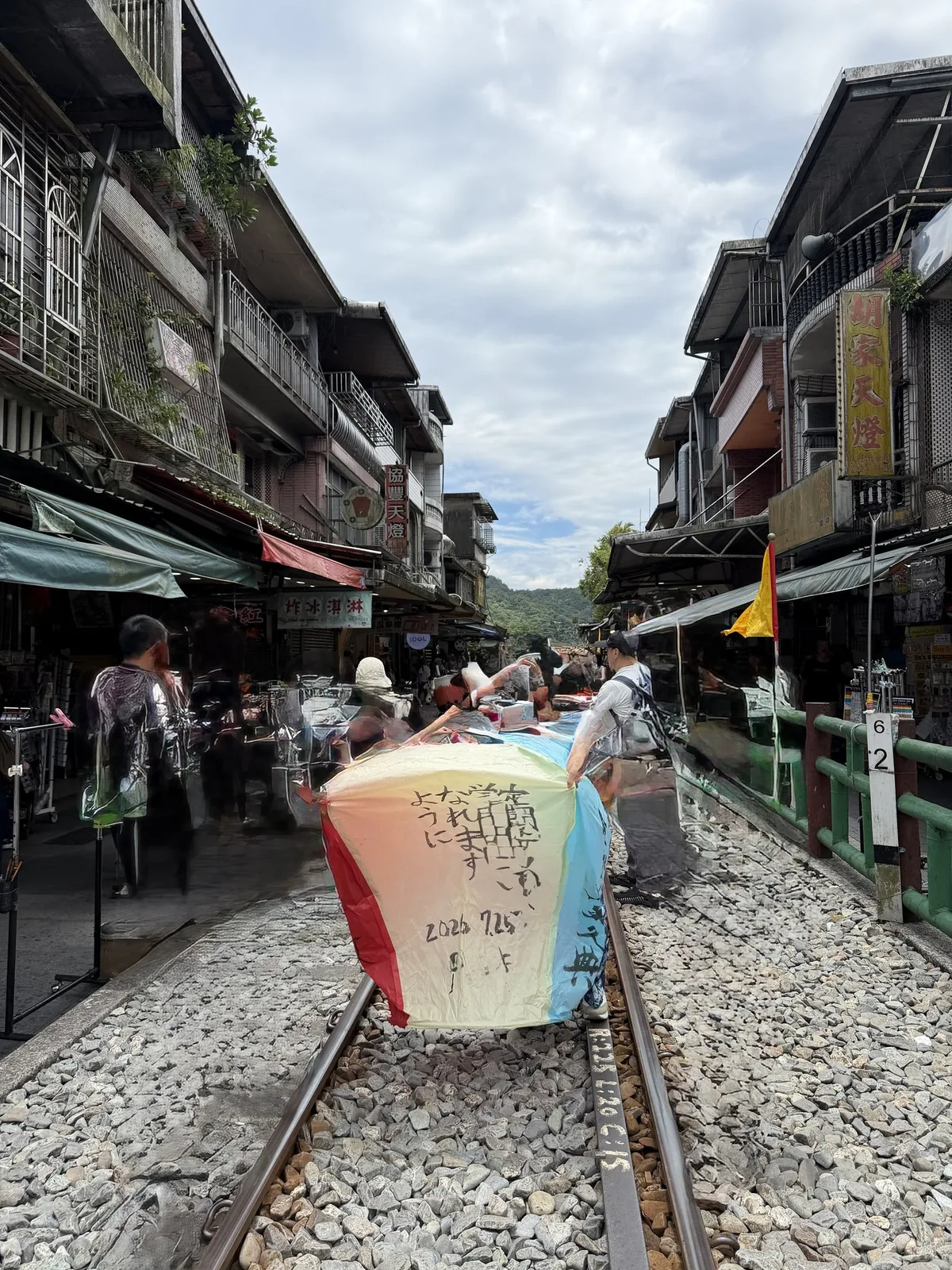
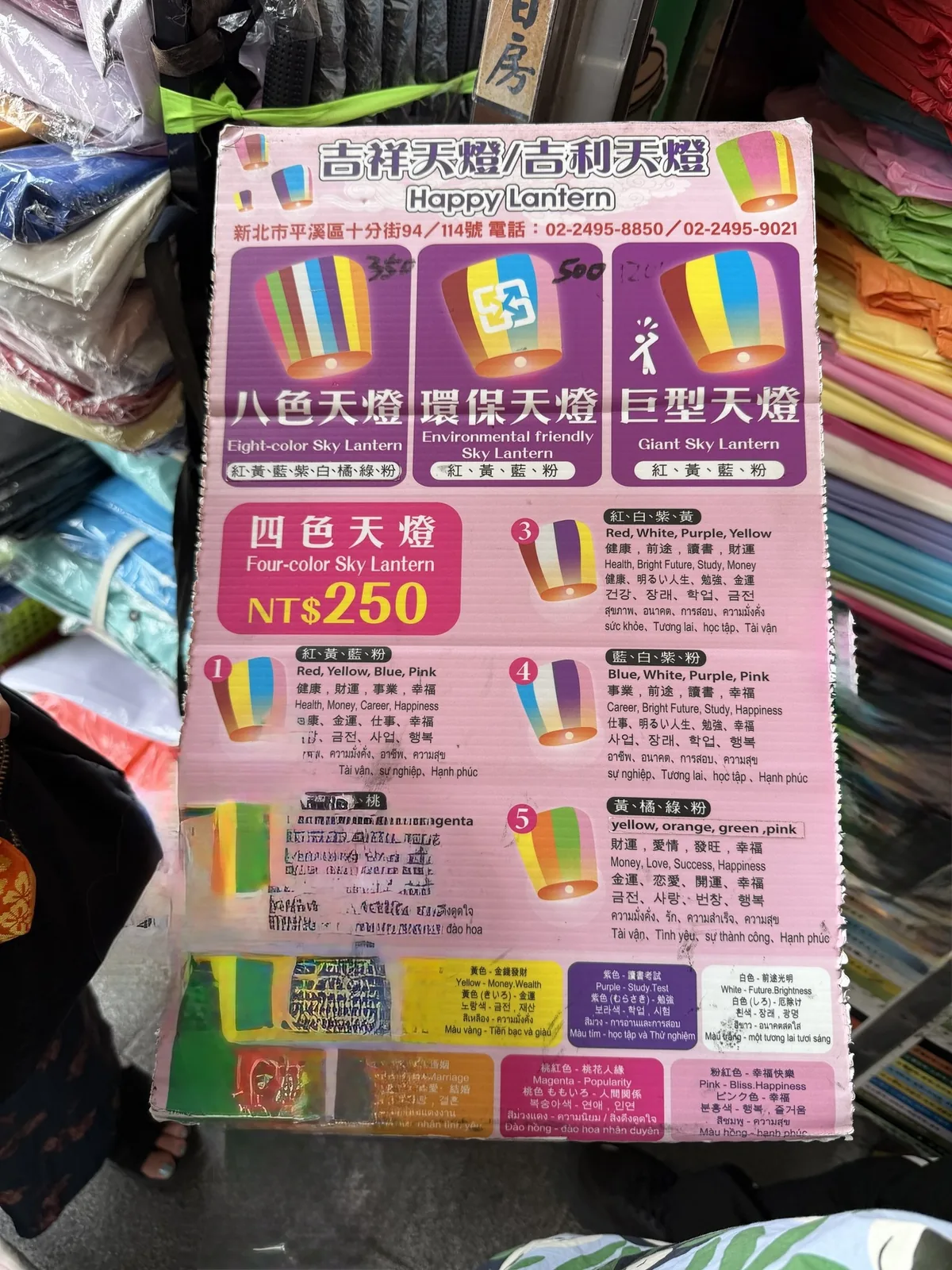
If you split six people into two groups and release two lanterns, everyone gets to be a person who releases one. If six people gather around one lantern, someone ends up just watching. A lantern costs NT$250 each, so two is not a big expense.
Last time we went on to the waterfall, but this time we did not. I judged that it was better to stop at the lanterns than to add walking distance for six people.
Around 13:20, by taxi to Taipei Zoo (about 50 minutes)
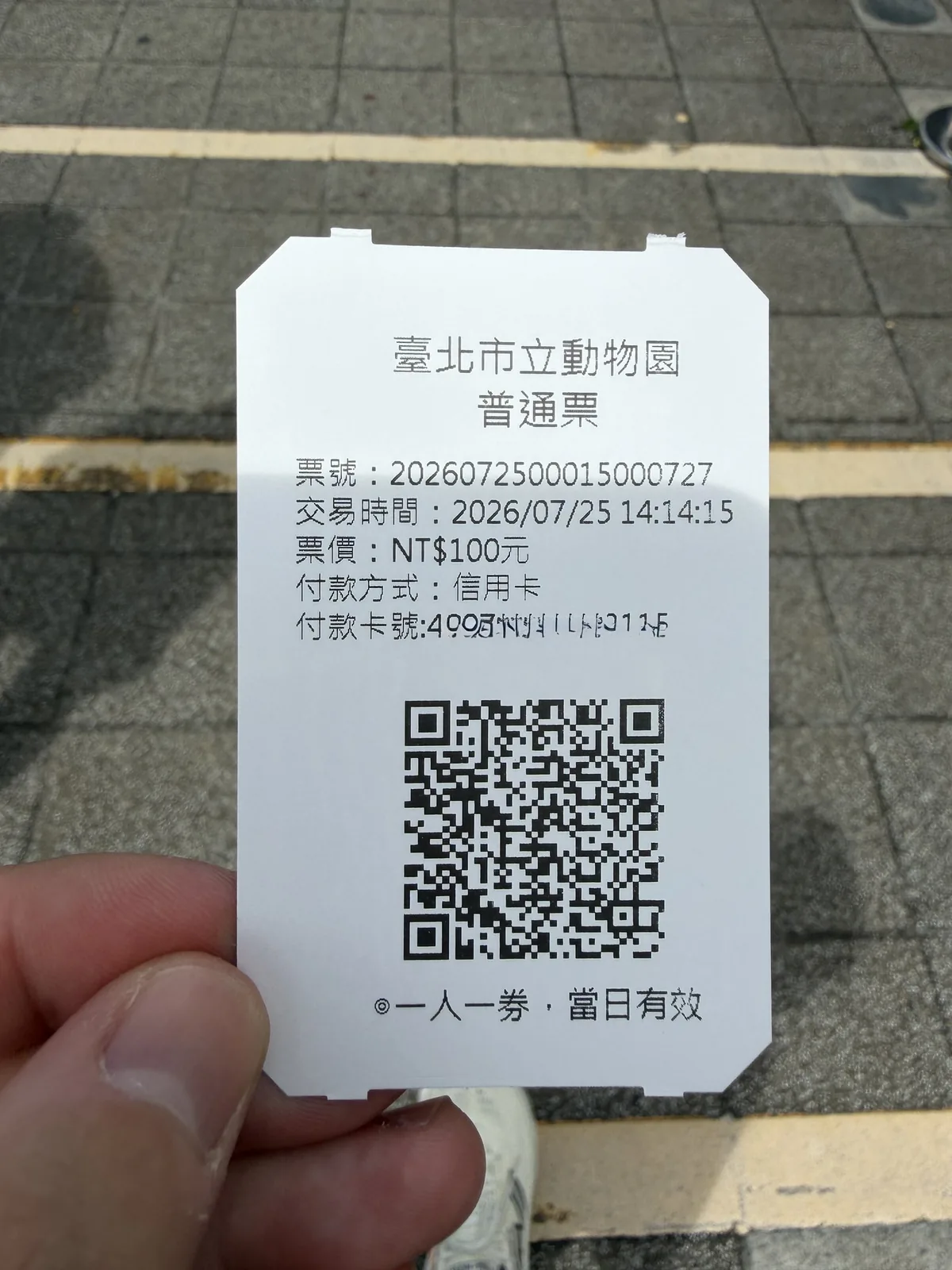
The taxi from Shifen to the zoo took about 50 minutes and cost NT$1,275 (about JPY 6,400). We reached the zoo at 14:14 (the time on the entry ticket). Split six ways, that was about JPY 1,070 per person.
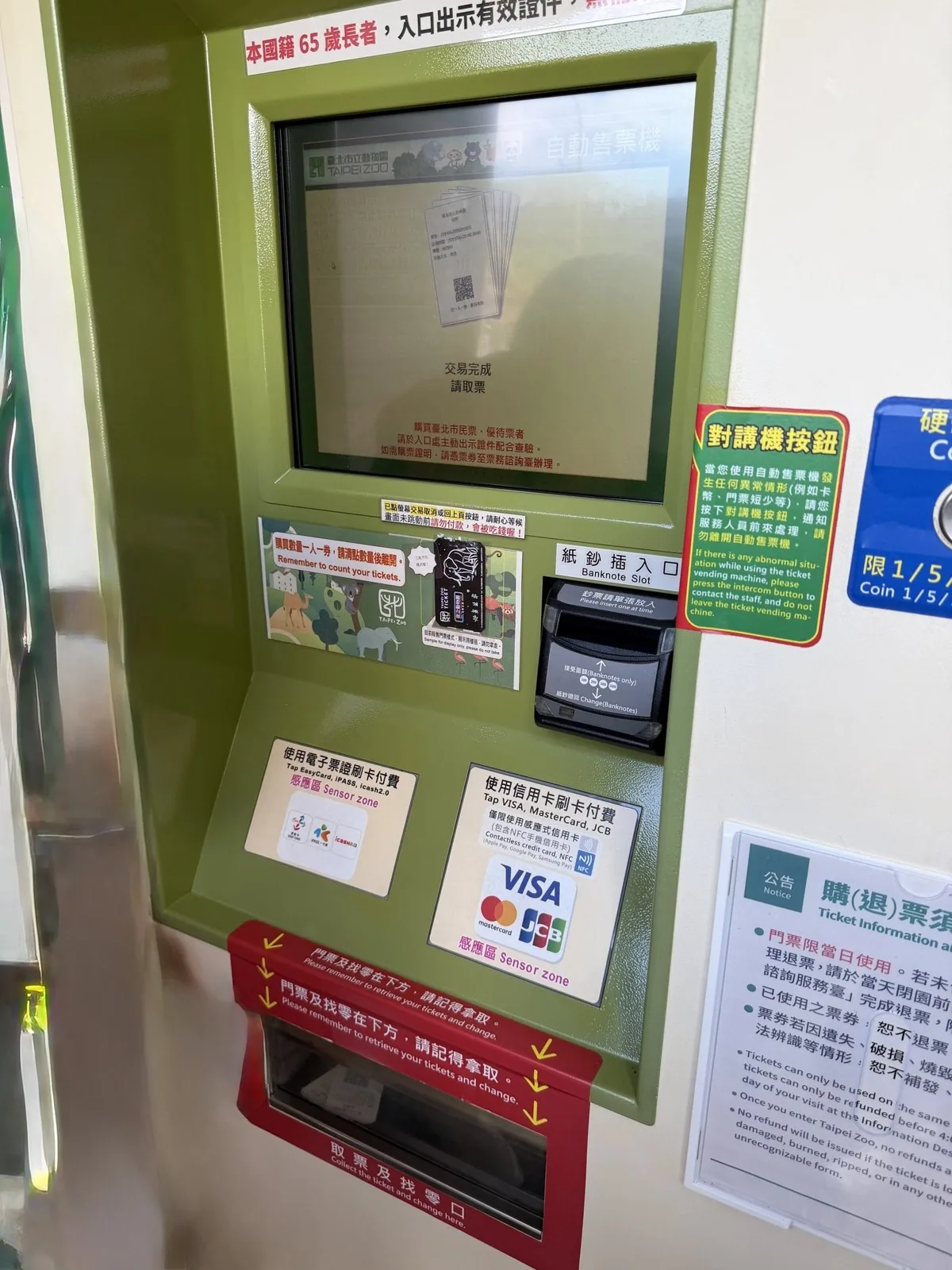
Those 50 minutes became our rest. All of us slept in the car, and by the time we got to the zoo our energy was back.
With three generations, whether “resting while you travel” works changes how much usable time you have in the afternoon. If we had been standing on a crowded train, this would not have happened.
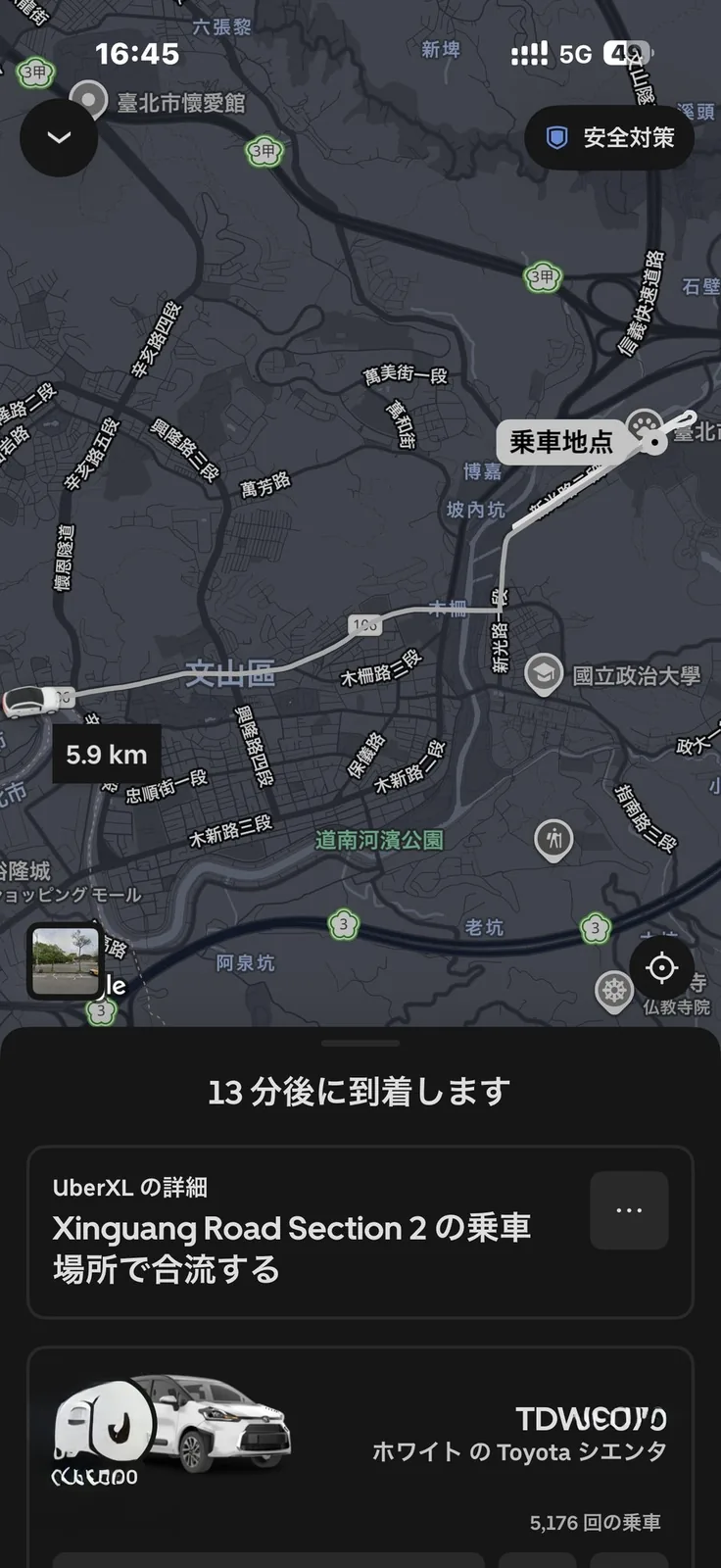
When you call a taxi for six people
The taxi you can call for six is the cheapest six-seat class every time, and what came was a car like a Sienta. There is no room for suitcases. On a day with luggage, you need to specify a van size when you call.
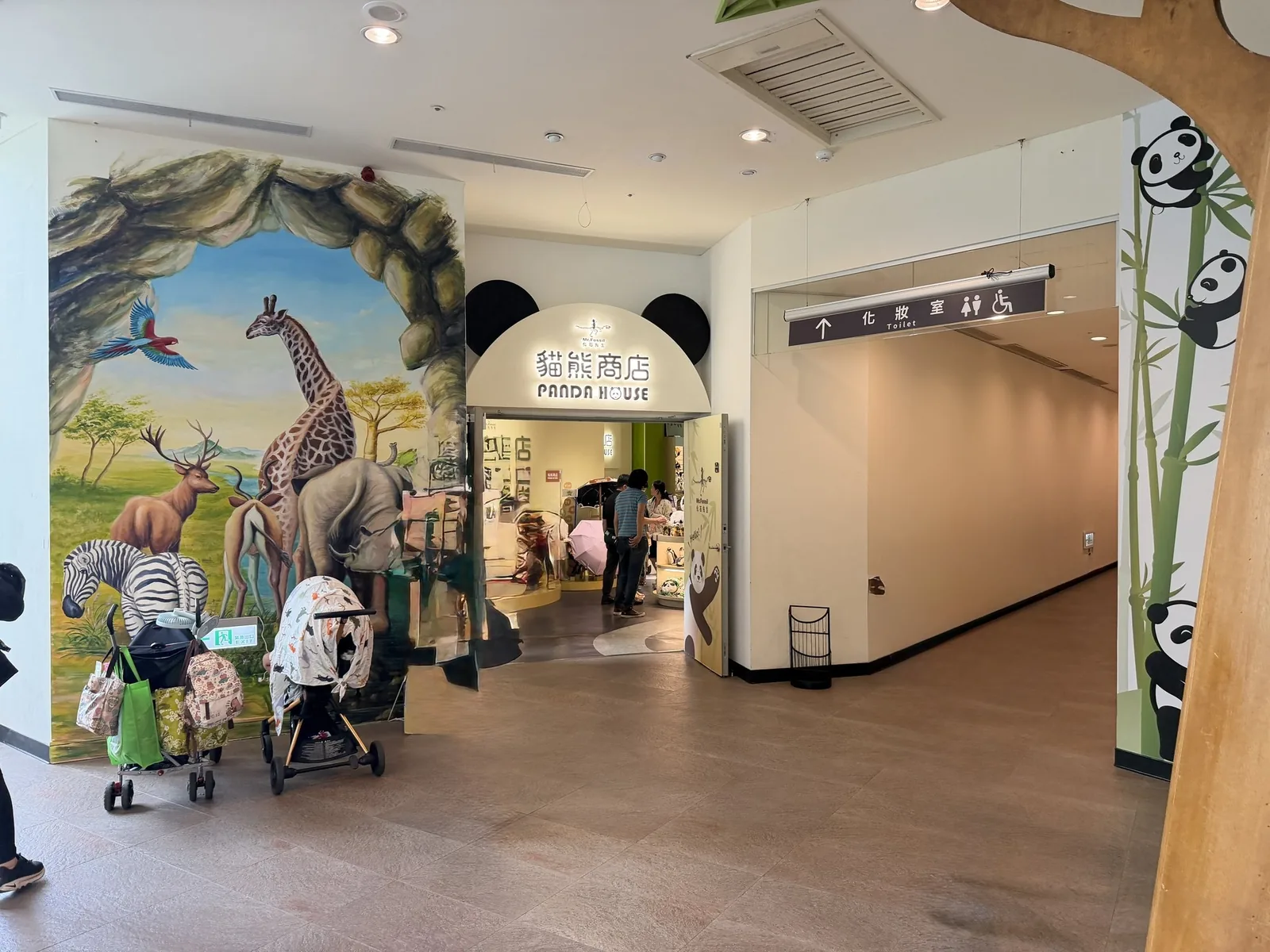
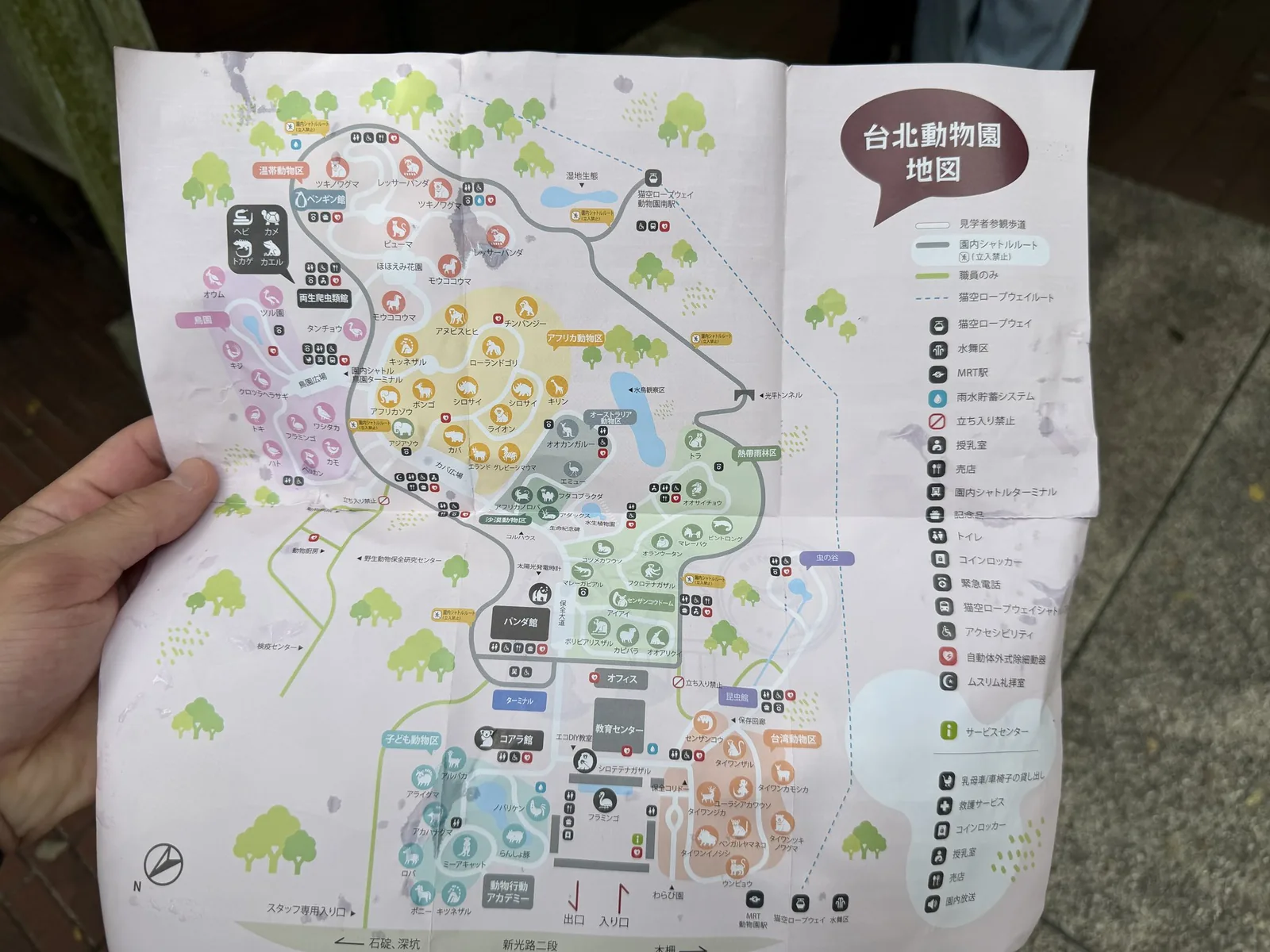
When you research the zoo beforehand, you read that “the right way is to take the shuttle train to the top of the park and walk down through the cool pavilions.”
We did not take it, because the train was crowded. When we actually walked, the panda house was within walking distance. The back of the park is much bigger, so you can stop early depending on your stamina.
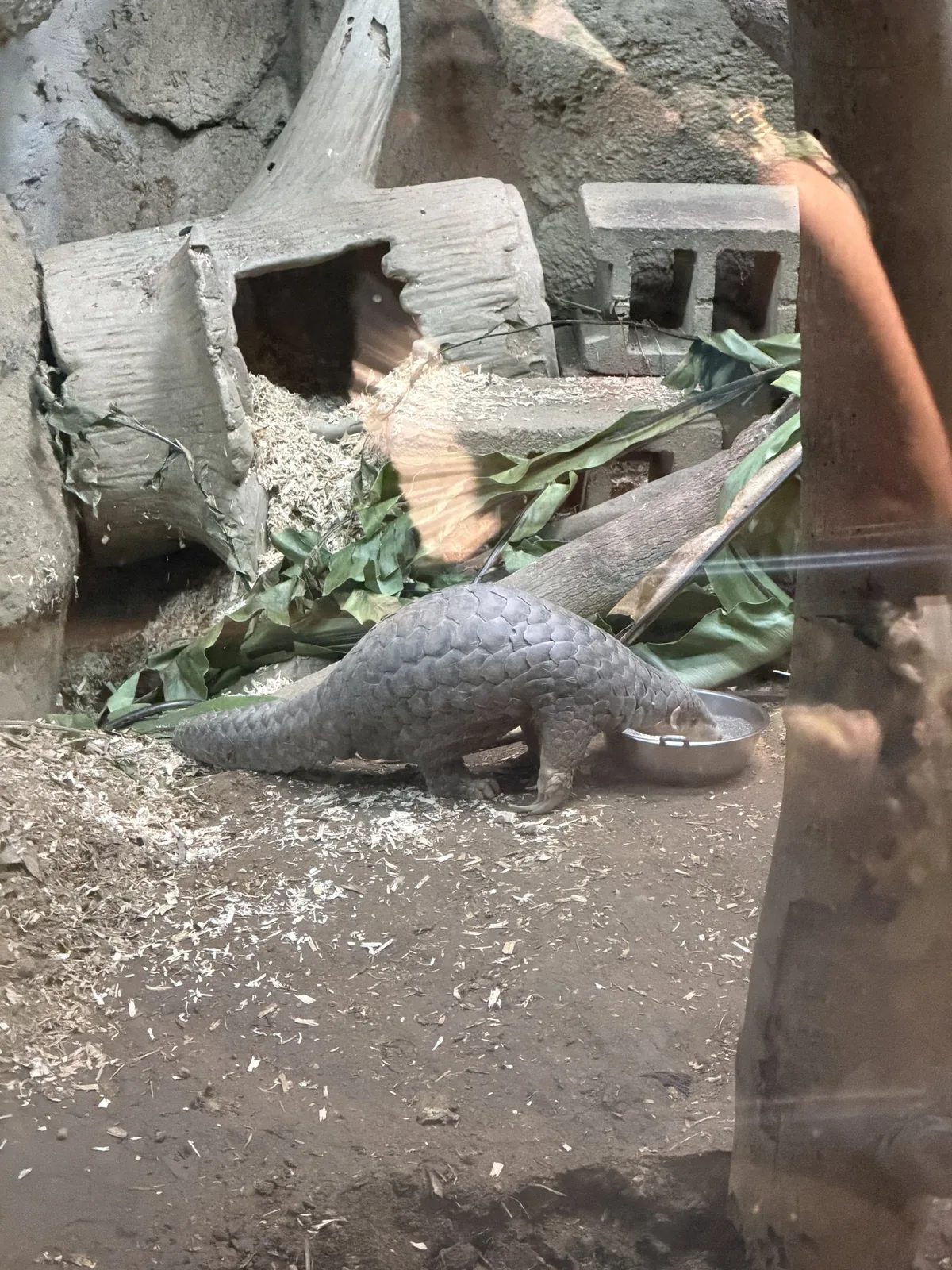
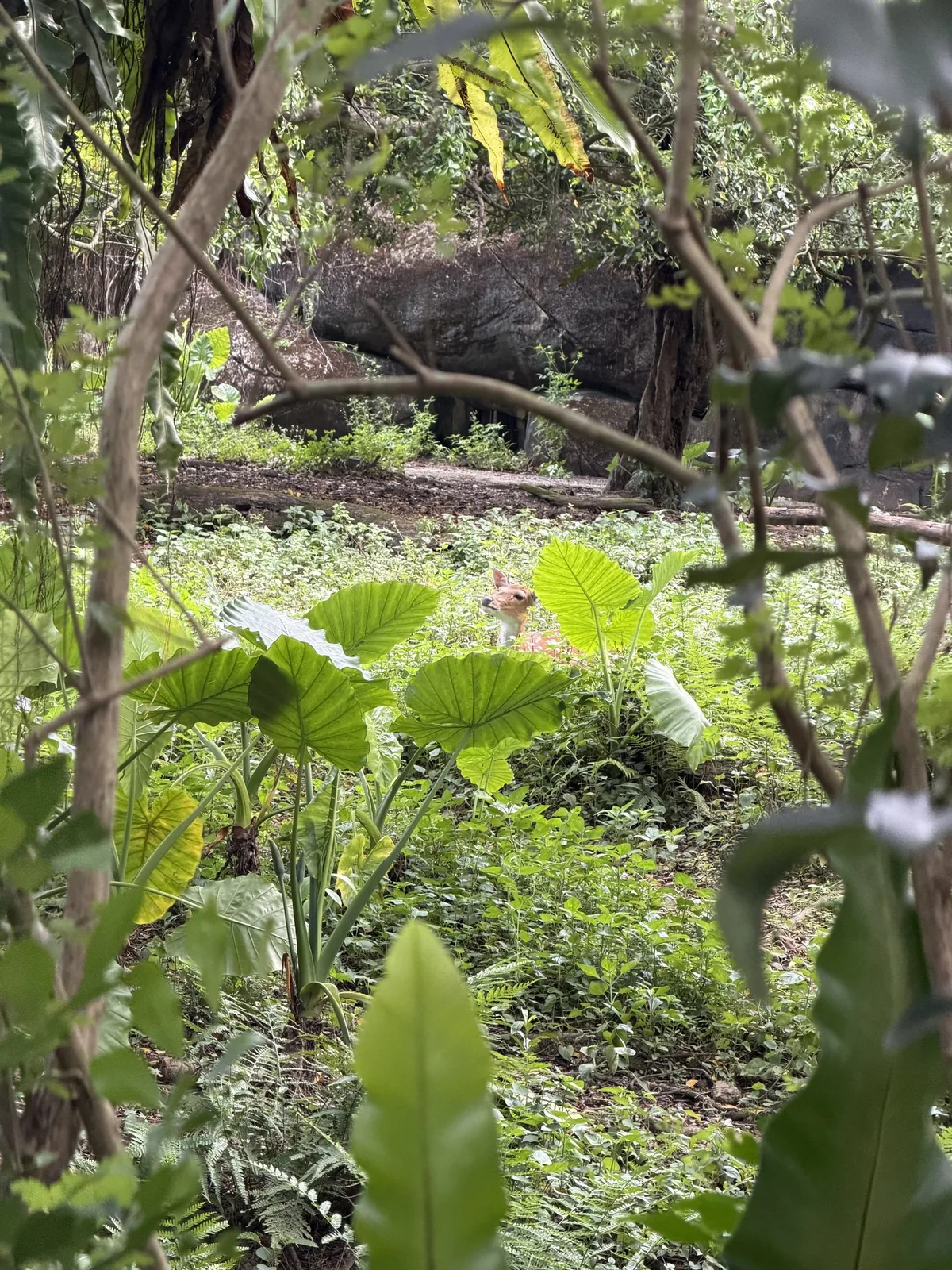
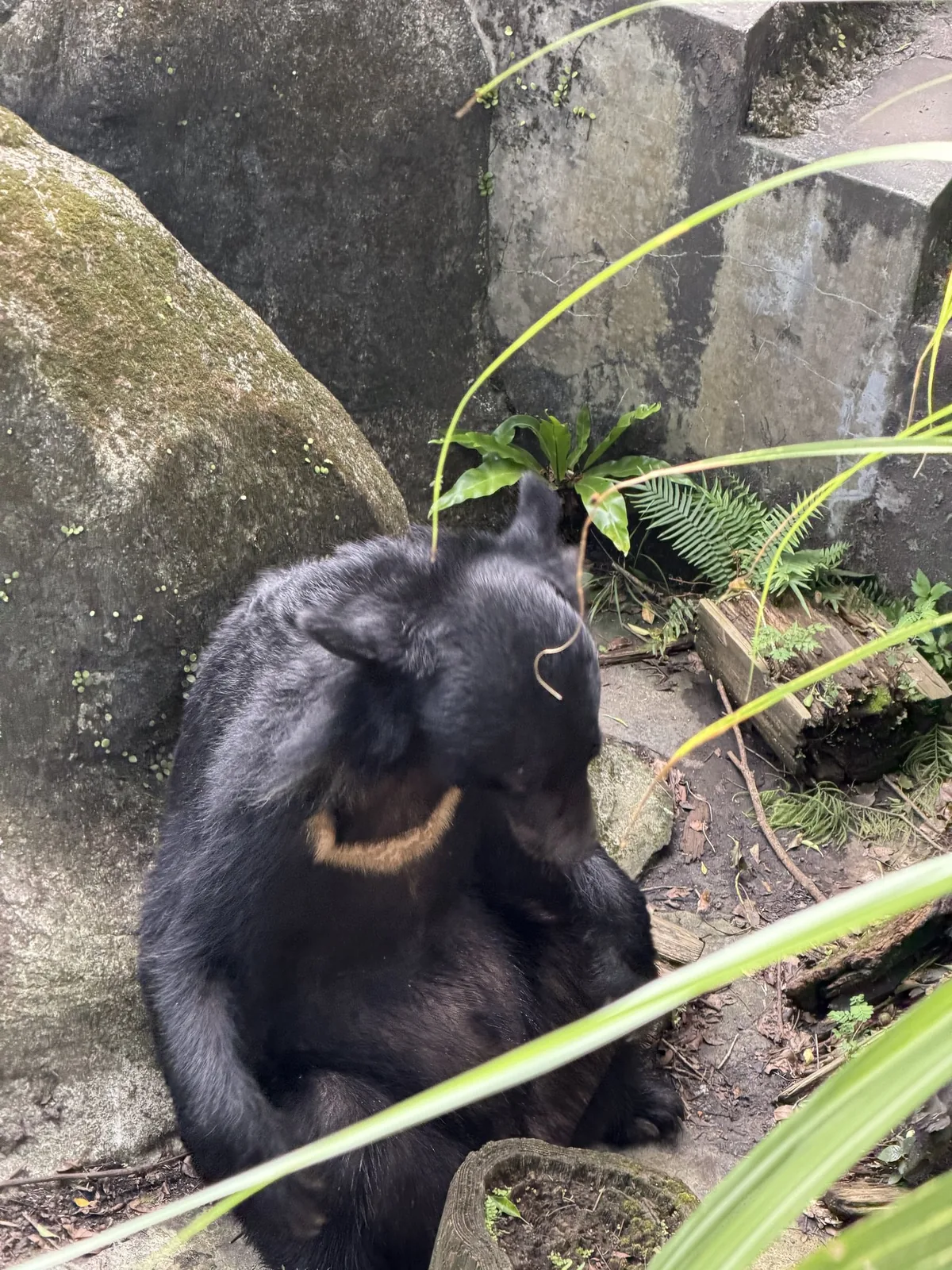
The zoo has a “Formosan Animal Area” with only Taiwanese animals. We saw all of it: the pangolin, the Formosan sika deer and the Formosan black bear. We went around and saw every animal in the Formosan Animal Area.
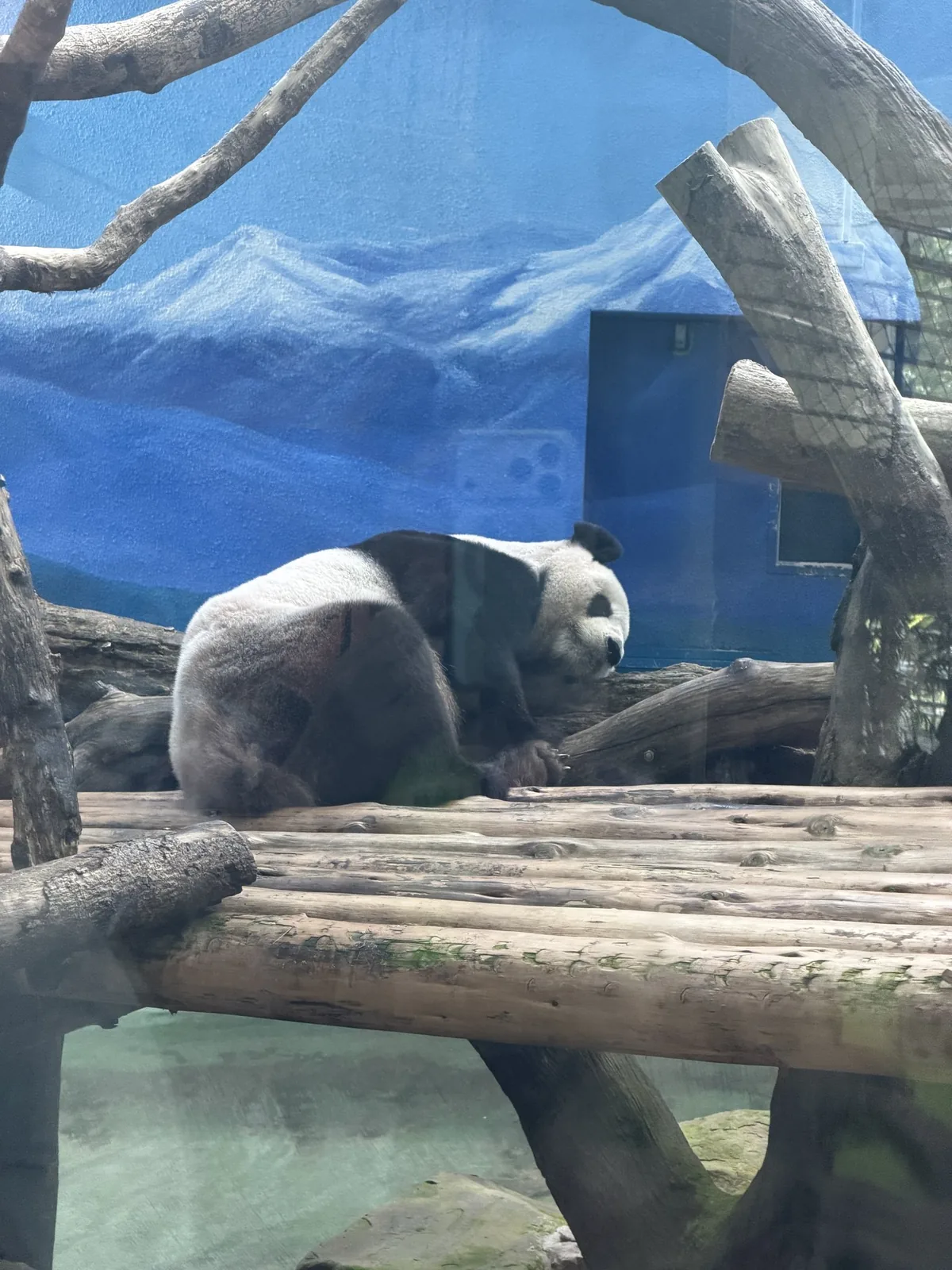
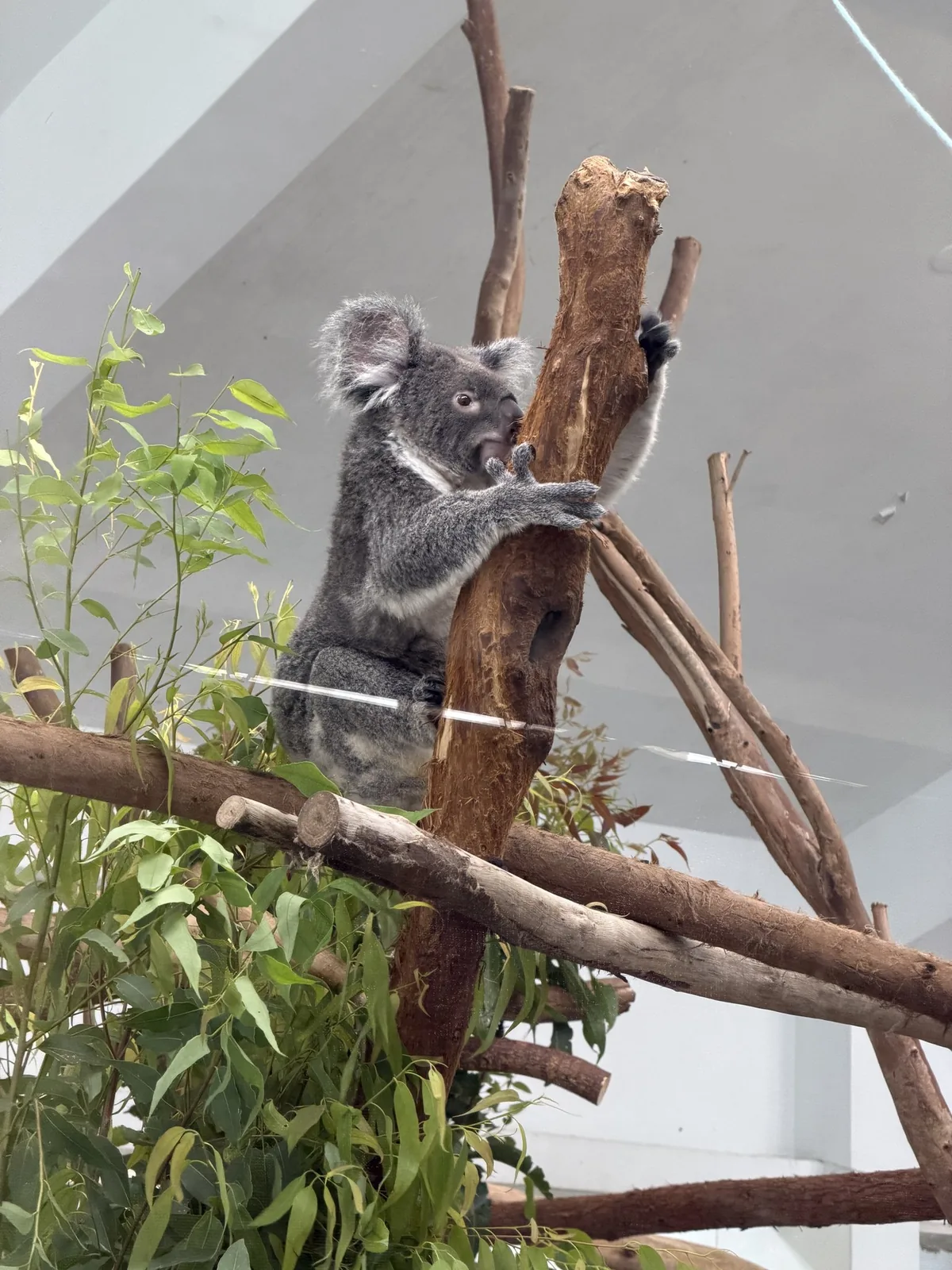
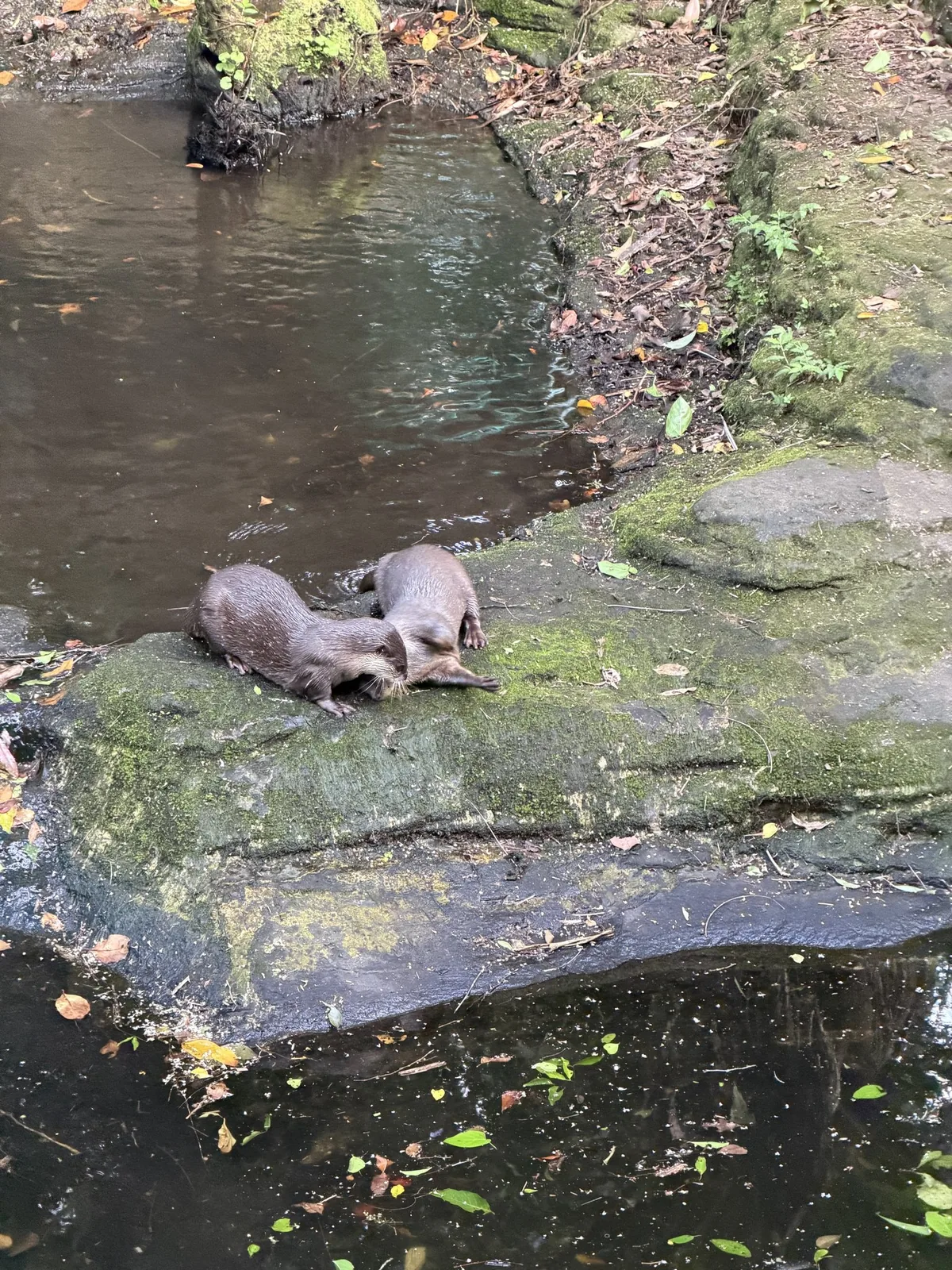
After that, we headed for three things: the panda, the koala and the Asian small-clawed otter. These three were also what the children were looking forward to.
The panda in particular was a hit, and the children were happy to actually see it. The children love otters, and the otters were the one place worth walking all the way to the back.
Two otters were playing together, and we could not move for a while.
The enclosure was large, and we said as a family, “The otters in Taiwan seem to have lots of room and look like they are having fun.” The children who had been looking forward to it watched the longest.
The trick to not getting lost in a big zoo is to decide “three things we want to see” first. If you try to see everything, the difference in stamina turns straight into complaints.
With three things, even if you cut the day short you can say “we saw what we wanted.” Pandas and koalas are hard to go and see in Japan. The Formosan Animal Area was added on top of that, so what we wanted to see was all taken care of at once.
18:00 Mingyue Tangbao, 18:50 shaved ice at Dongqu Fenyuan
We called a taxi (15 minutes, NT$382) to Mingyue Tangbao (明月湯包), a local xiaolongbao shop.
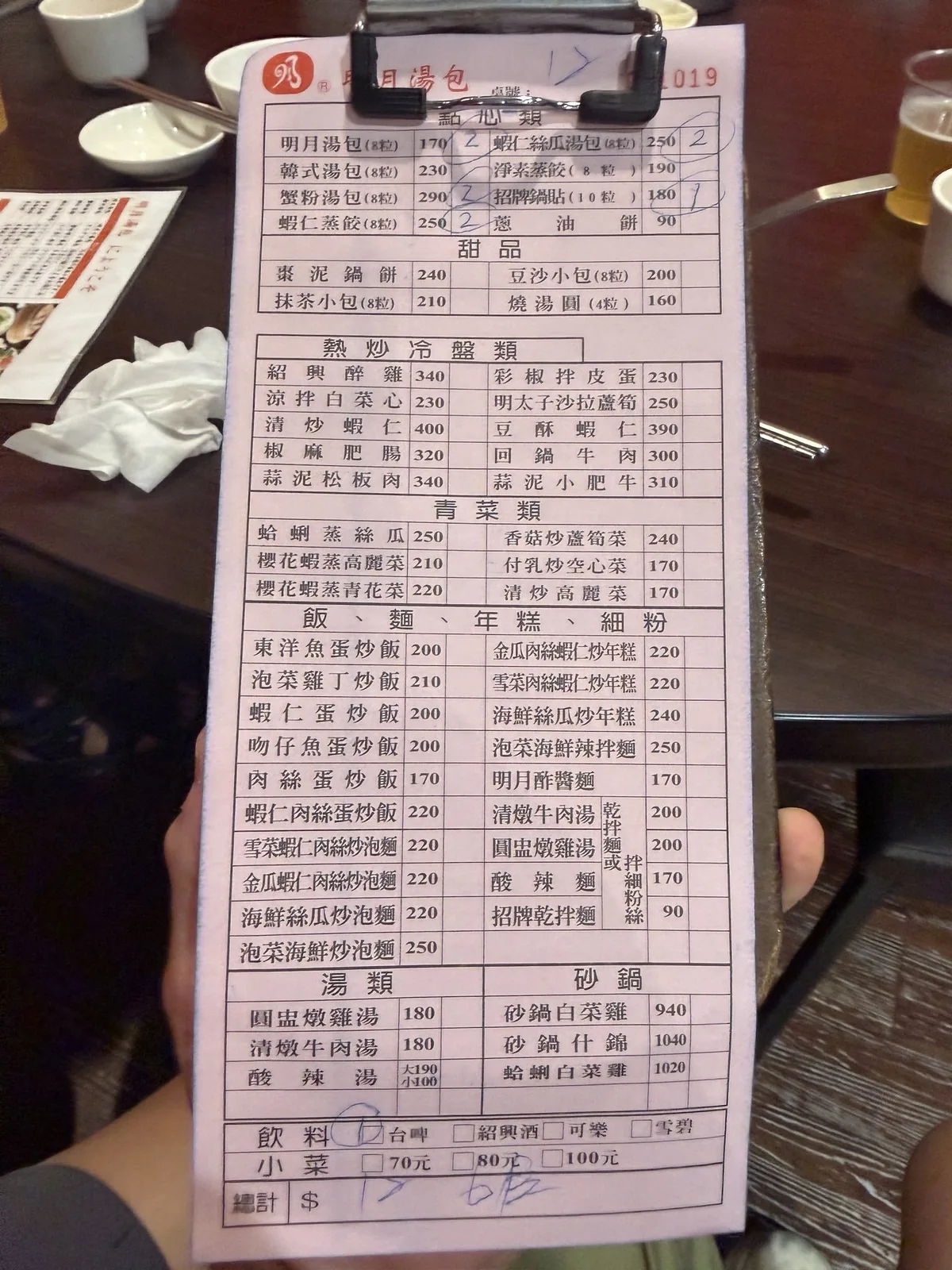
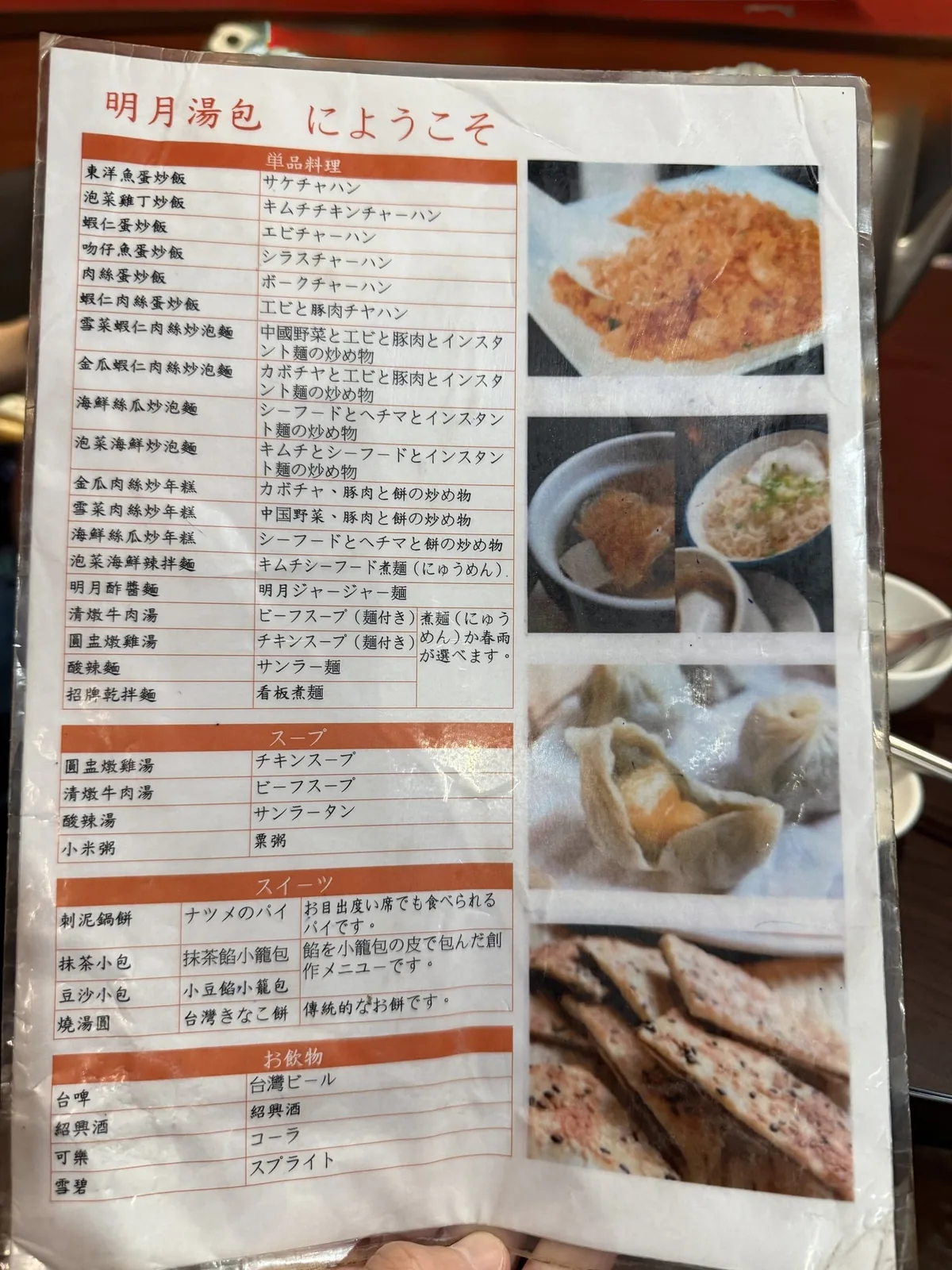
Here the prices are printed on the order slip, and you write in the number you want.
The signature Mingyue Tangbao (8 xiaolongbao) is NT$170, the crab-roe tangbao is NT$290, the shrimp and luffa tangbao is NT$250, and the signature potstickers (10) are NT$180. For six people, this was the place where we could order many kinds.
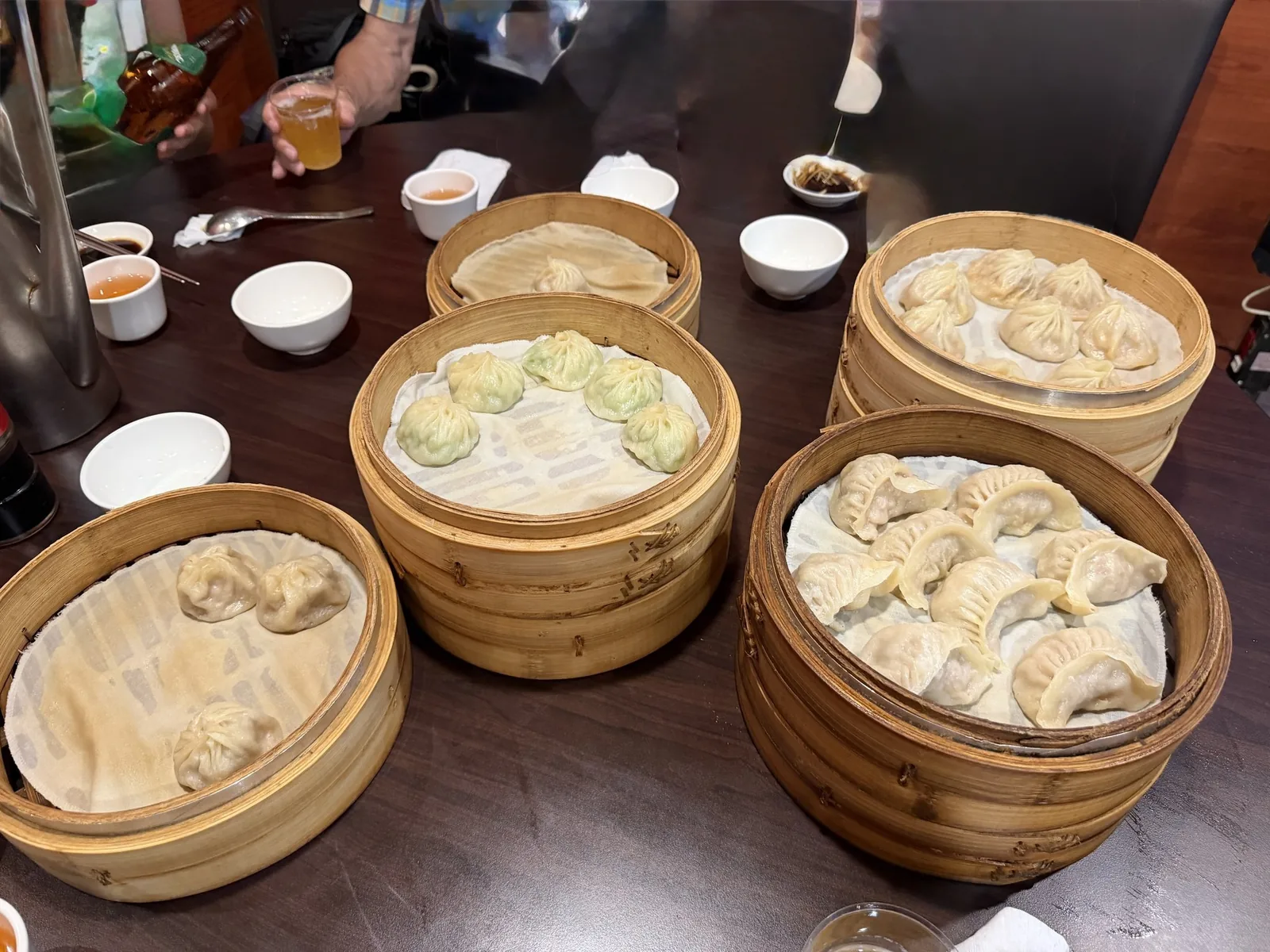
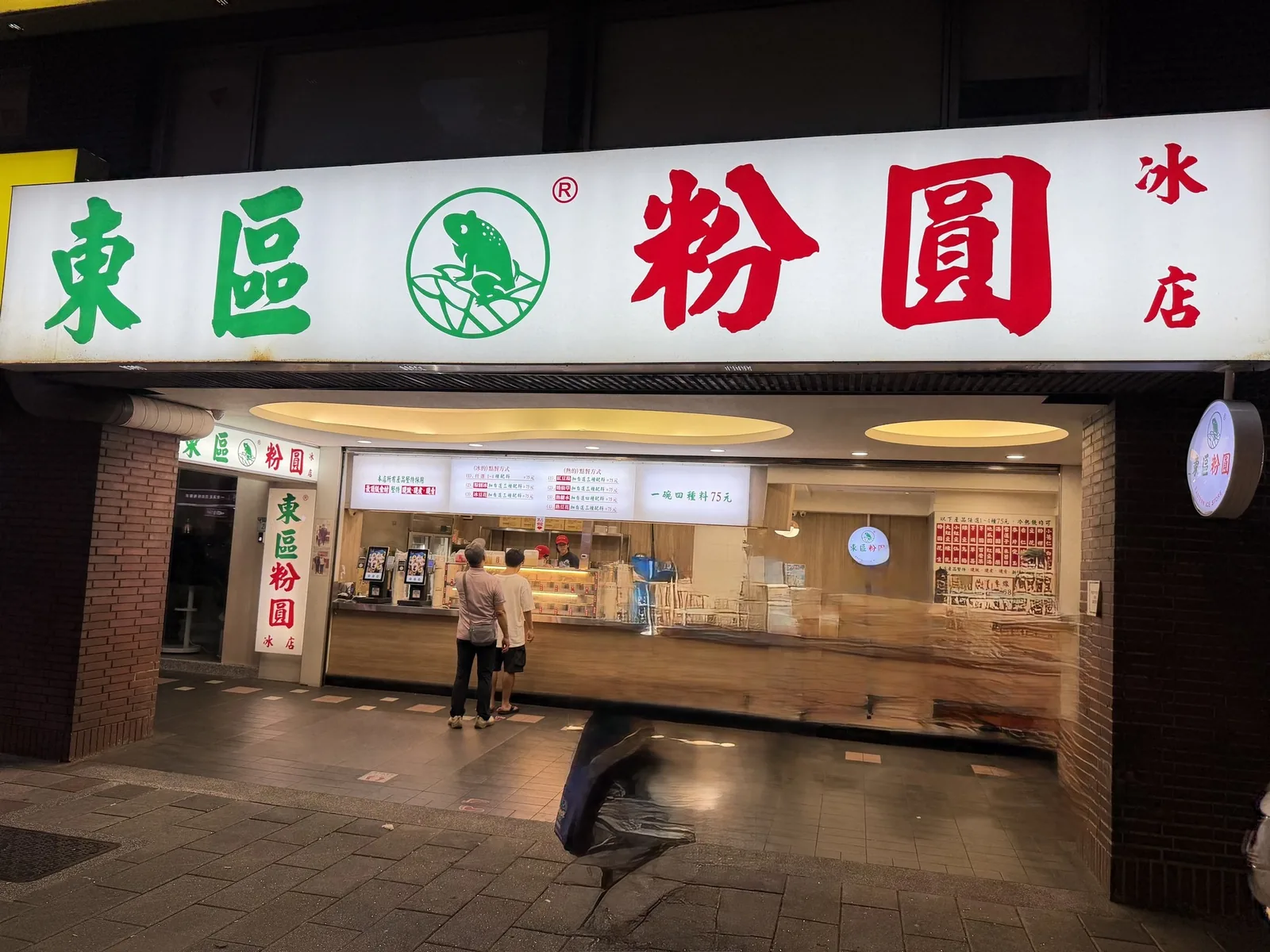
After that we walked along Tonghua Street and had shaved ice at Dongqu Fenyuan (東區粉圓).
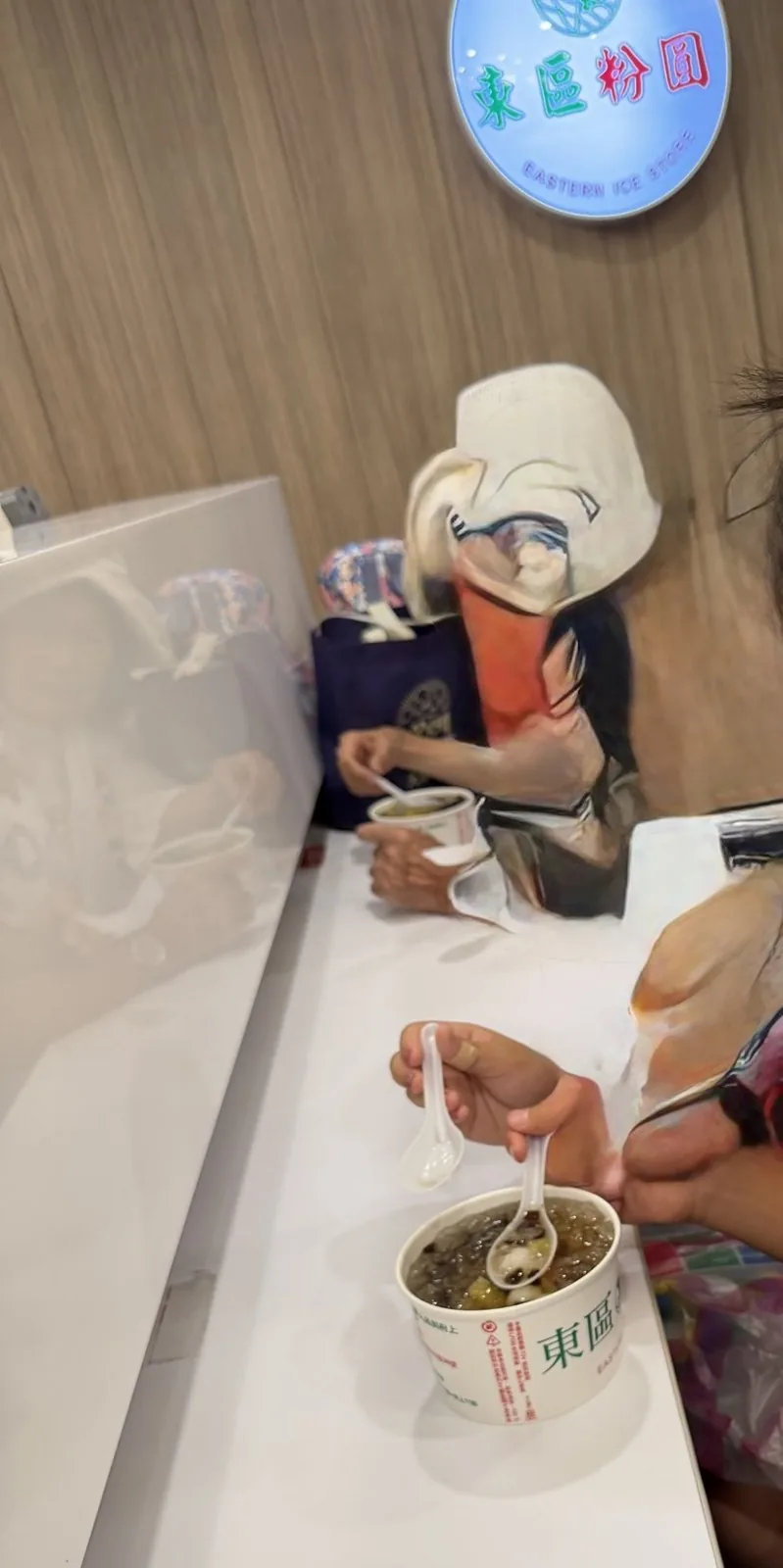
20:00 The grandparents go to the hotel, the four of us go to Ningxia Night Market
We took the train from Xinyi Anhe Station and split up here. The grandparents went back to the hotel to rest, and my wife, our two children and I headed to Ningxia Night Market.
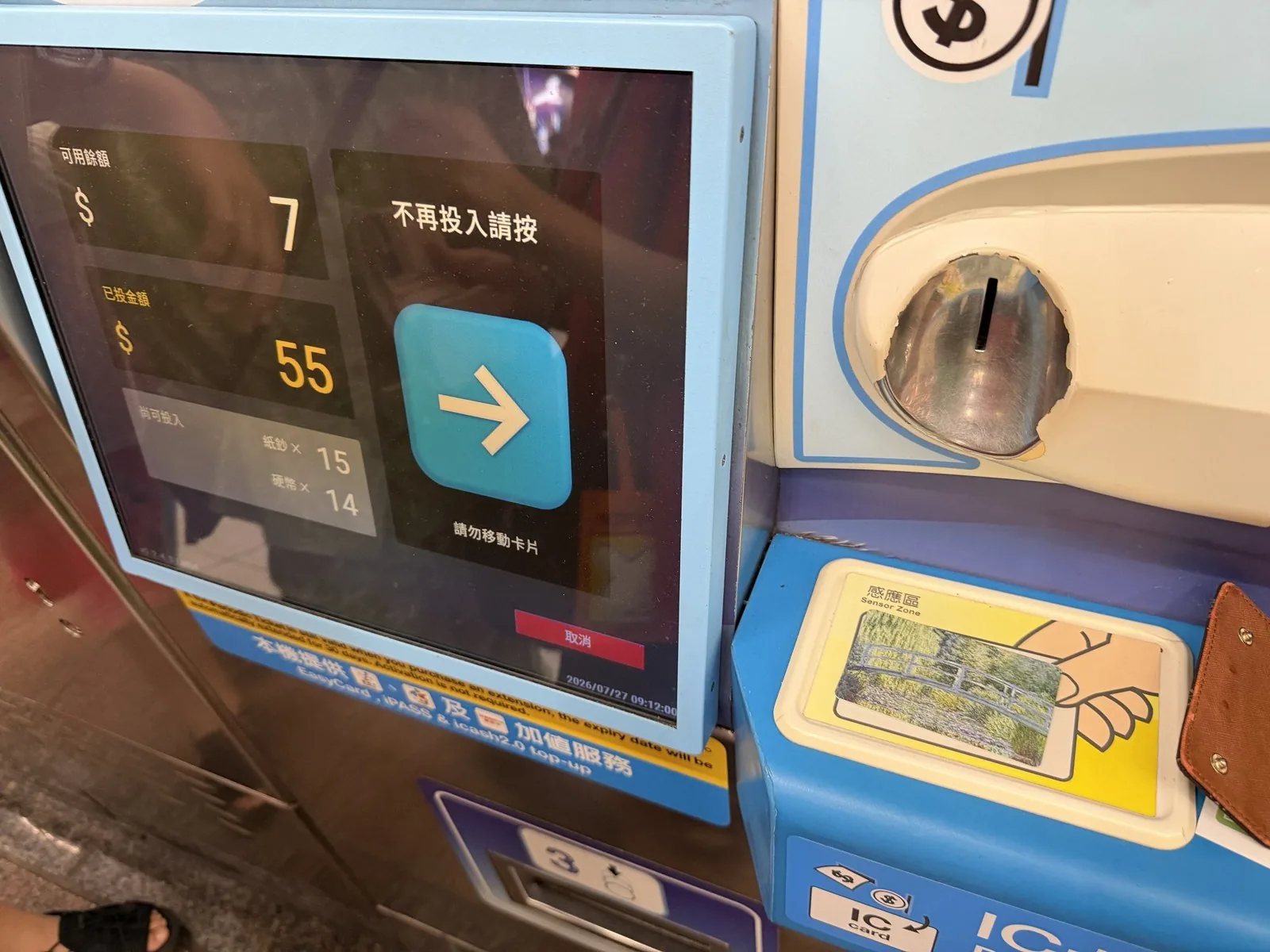
With three generations, it works well to build “splitting up partway” into the plan from the start. If everyone tries to go to the very end, one side or the other overdoes it.
Night markets come alive at night, so we decided to be practical and let only the ones with stamina go.
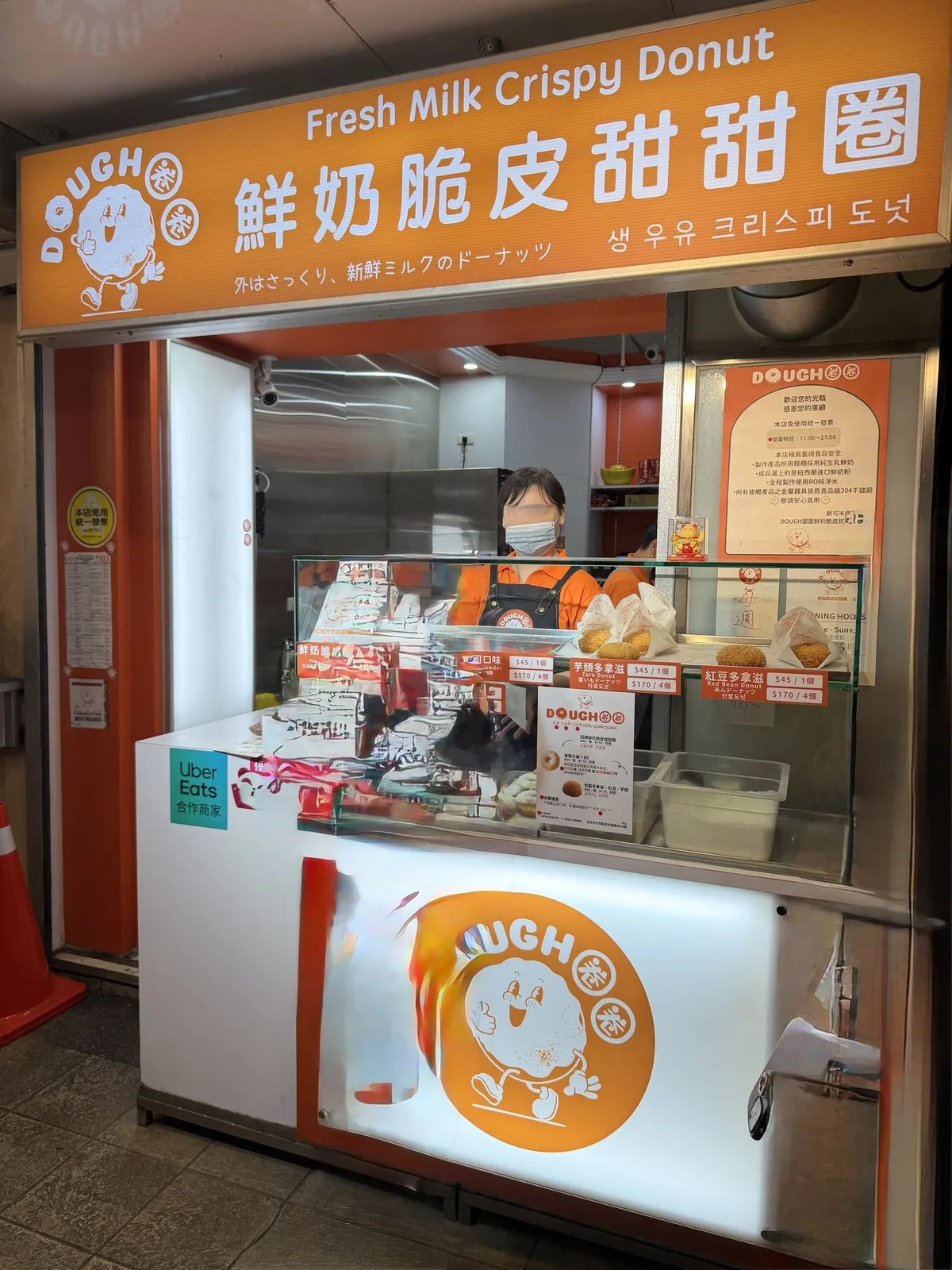
At 21:20 we got off at Shuanglian Station for donuts at 脆皮鮮奶甜甜圈 (Dough). We had eaten there last time too, and it was good.
We went into an oyster omelet shop because it looked familiar, and it turned out to be a different shop. At 22:49 we bought drinks at 50嵐 Chongqing branch and walked back to the hotel. It was a night walk, but a distance you can walk.
Day 3: National Palace Museum, a Din Tai Fung waiting ticket, Shilin Night Market
11:20 National Palace Museum. The bus was packed, and a taxi would have been right here too
We left the hotel at 10:20 and took the MRT Red Line to Shilin Station. From there it is about 10 minutes by bus.
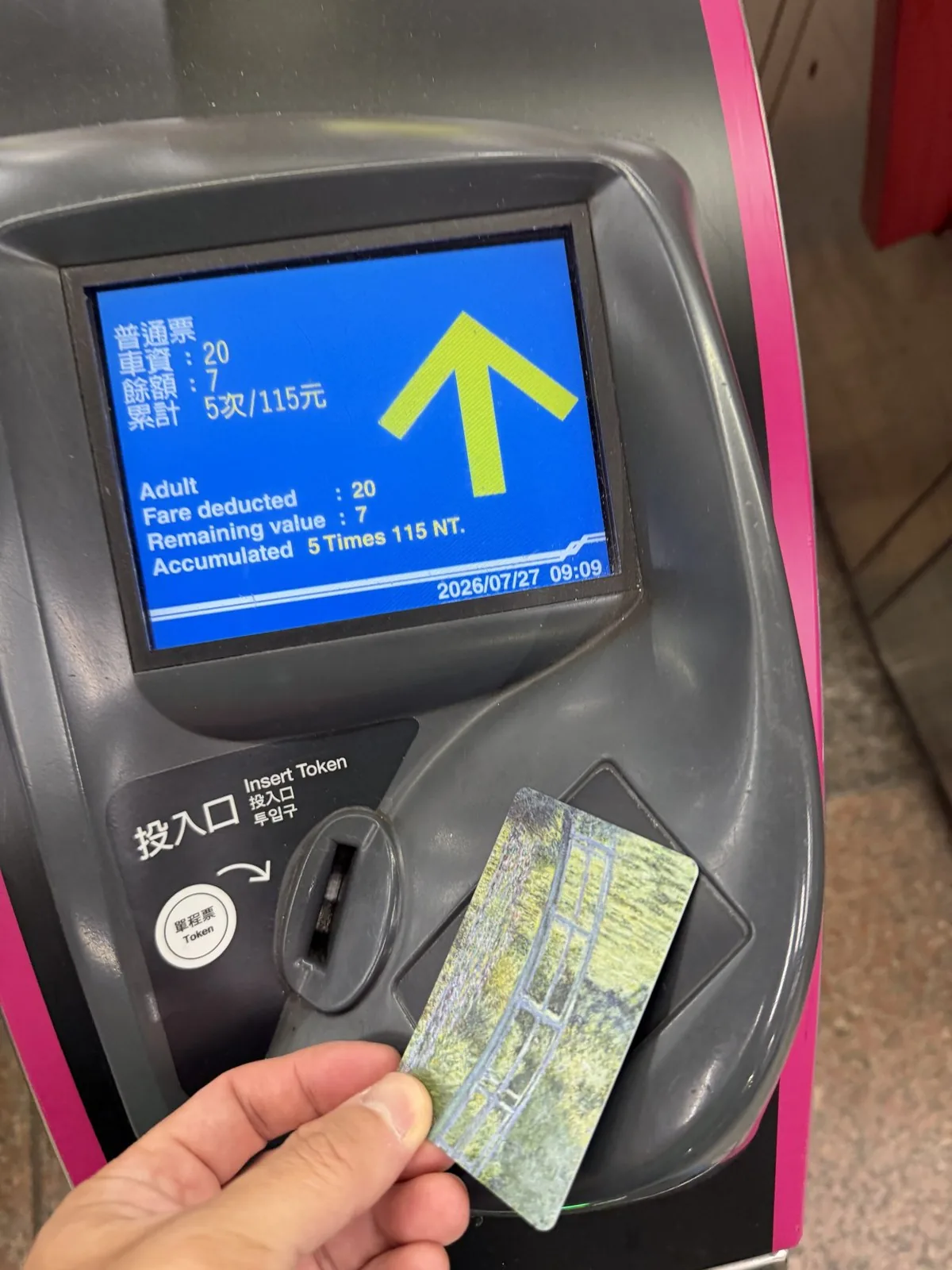
We could not sit on either the train or the bus, and the bus in particular was so packed it was painful. The National Palace Museum is a little way from the station, so the bus gets crowded.
We should have taken a taxi here from the start. Together with the Pingxi Line on Day 2, what wore us out the most on this trip was not the sightseeing but the crowded public transport.
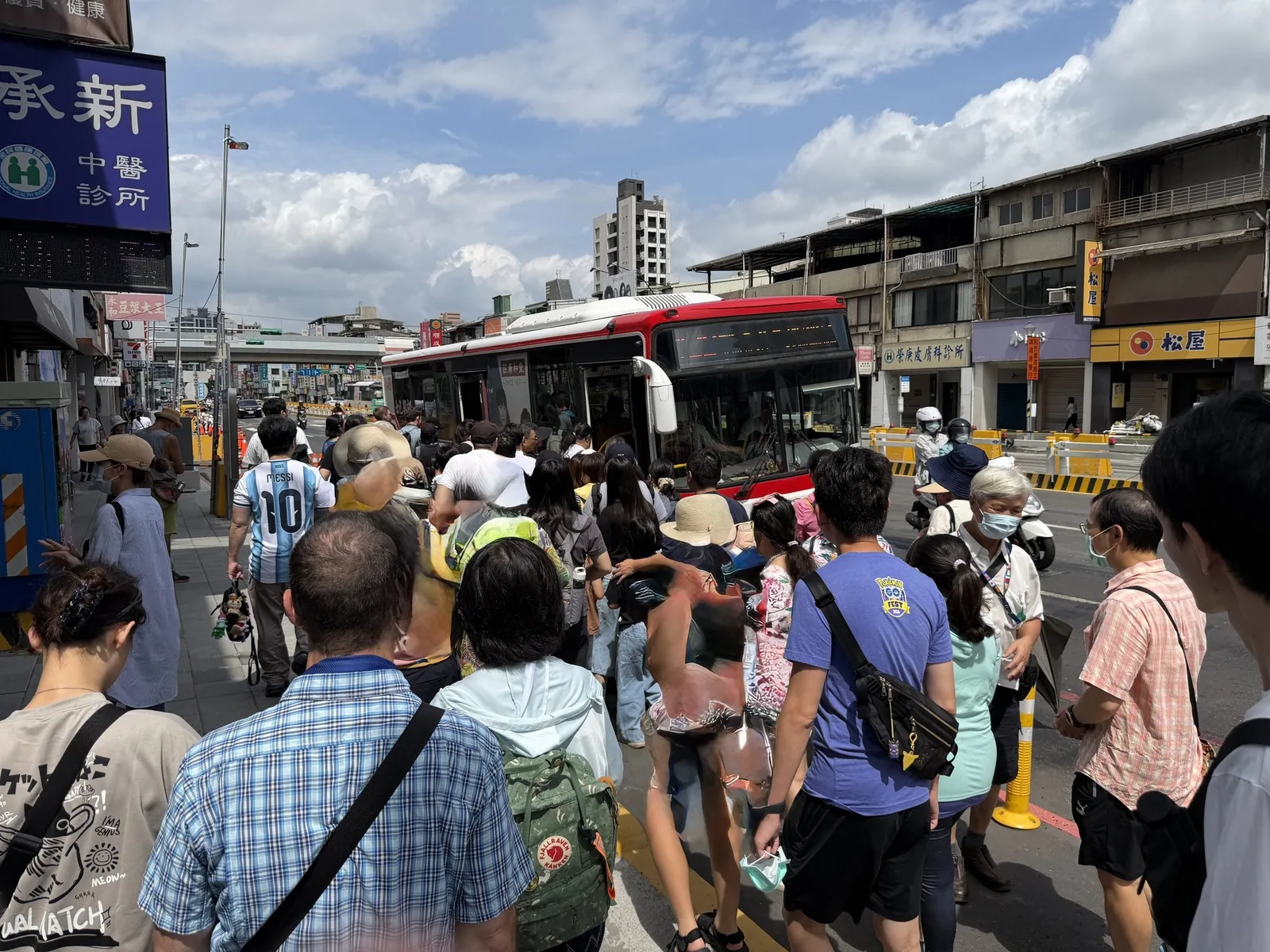
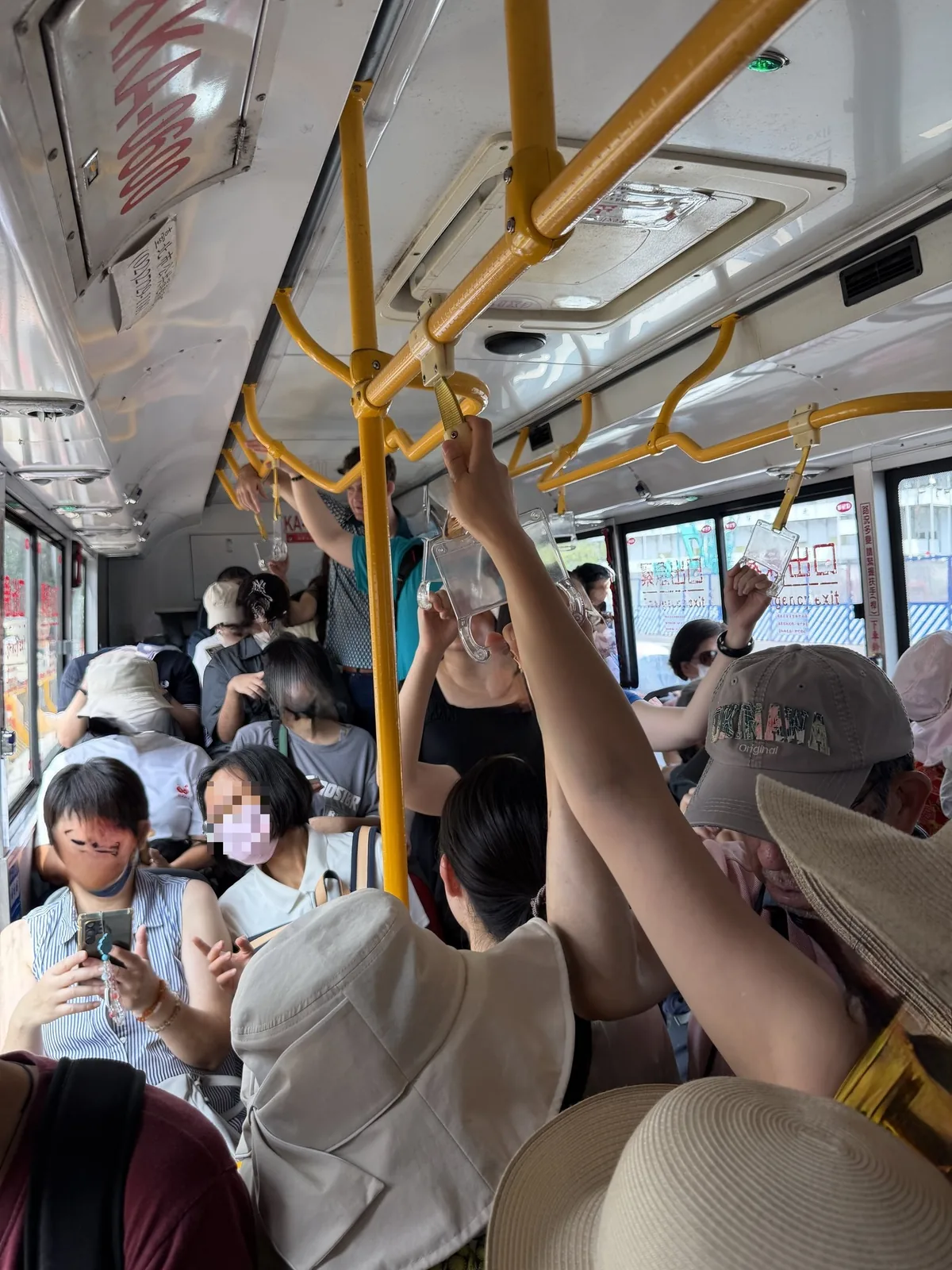
Inside the museum it is air-conditioned, and at the end of July in Taipei it is almost chilly. Having something to put on was reassuring.
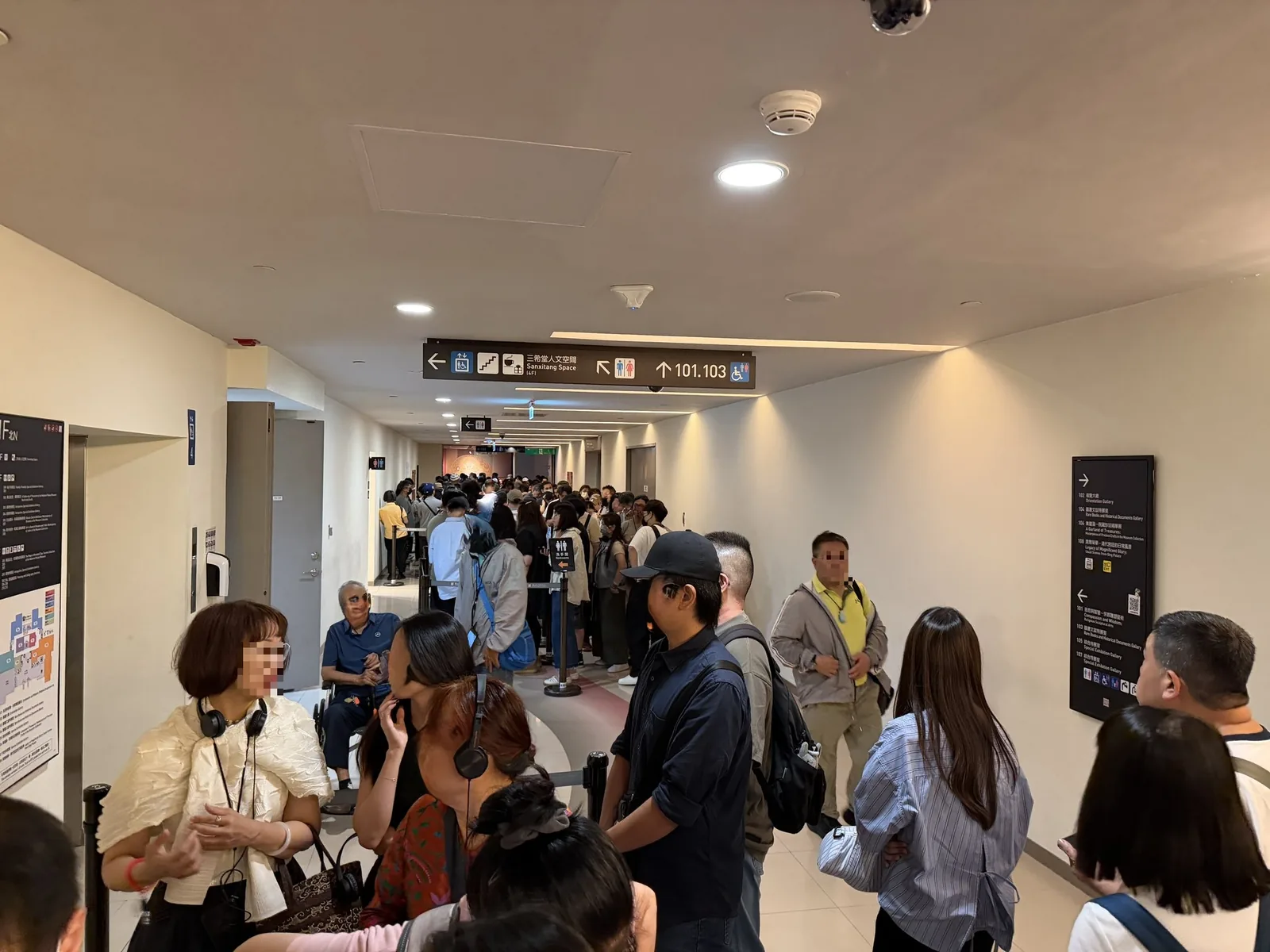
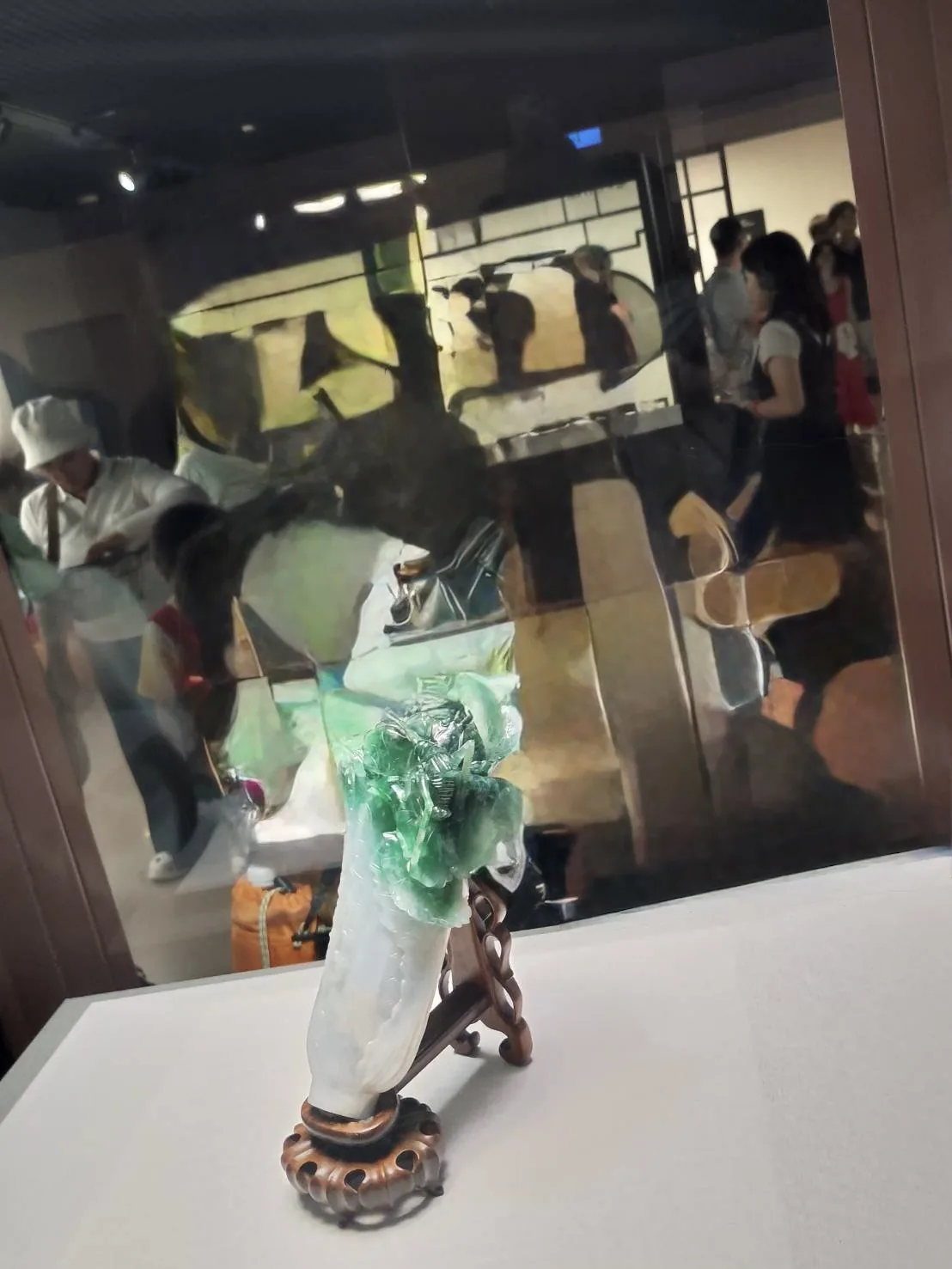
14:00 Din Tai Fung is by waiting ticket. We spent the 120-minute wait shopping
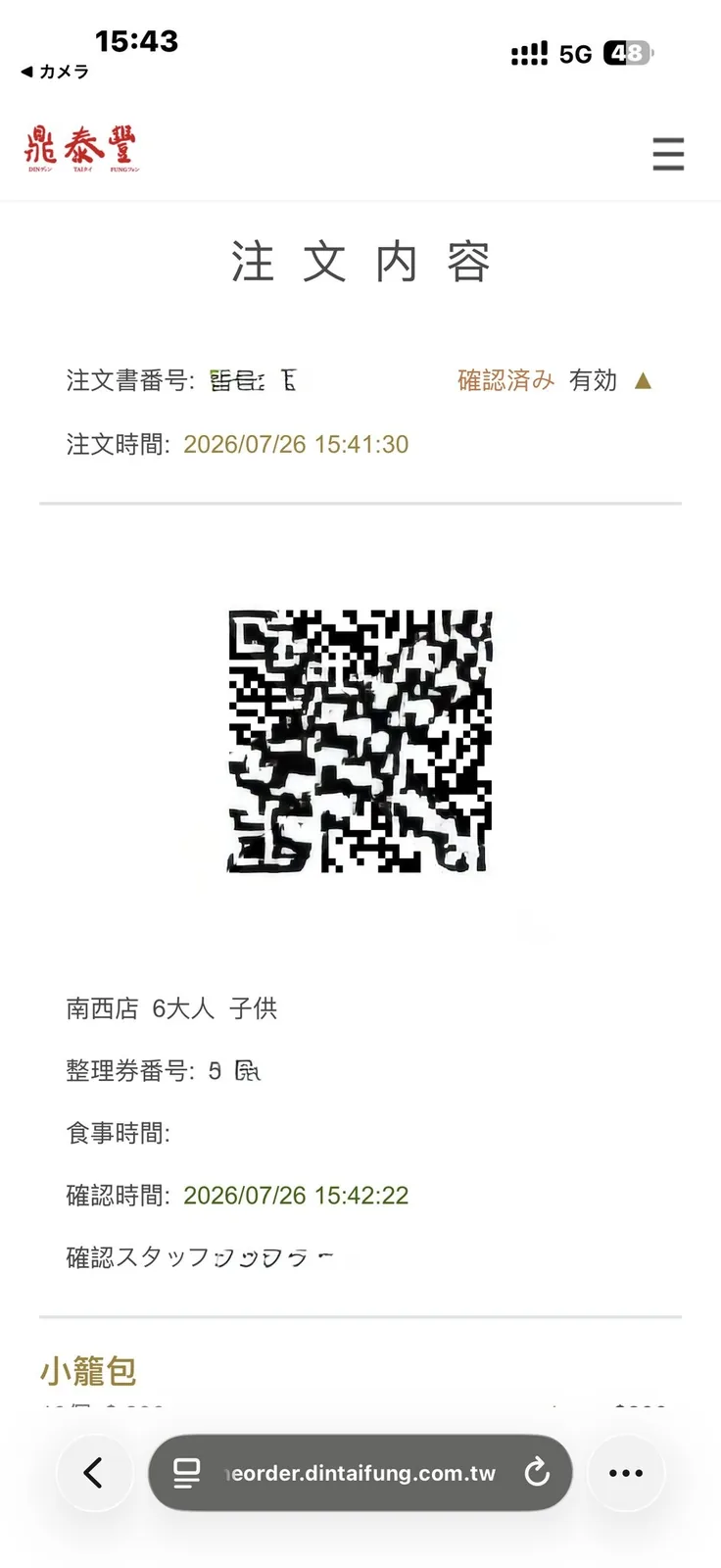
We took a taxi to Din Tai Fung, Shin Kong Mitsukoshi Nanxi branch. When we took a waiting ticket, it showed a 120-minute wait.
There is nothing to do here but wait, so we used the time for shopping. We went to Zhongshan Market, but it was quiet and we left quickly, and we bought lots of souvenirs at 全聯福利中心 Zhongshan Tianjin branch.
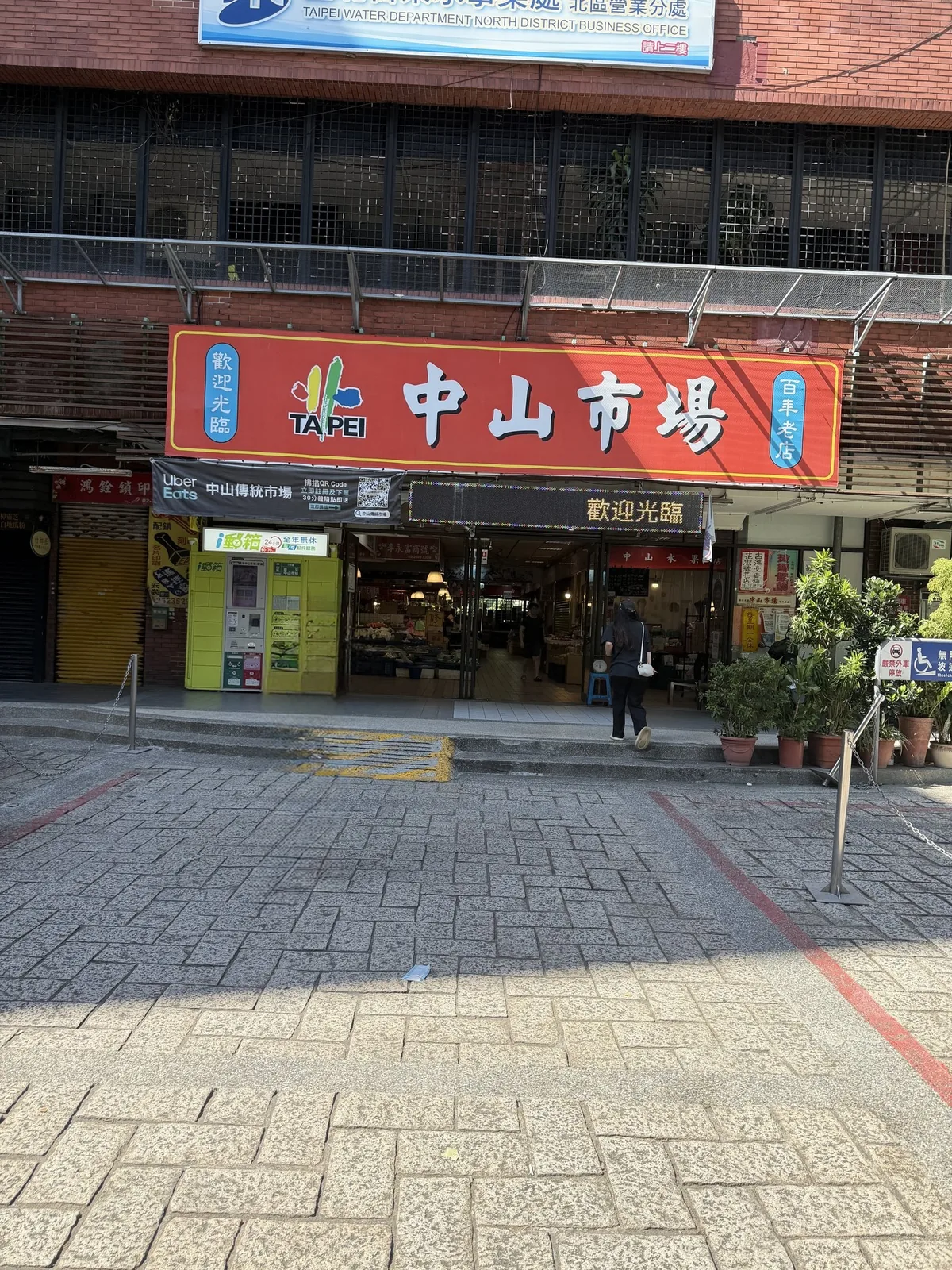
At 15:40, we checked the waiting number that can be viewed online and came back, but our turn had already passed. Even so, they put us in “the next first one,” and we were seated right away.
That day, even though our number had passed, they showed us in when we asked. It is the kind of thing you only know by going.
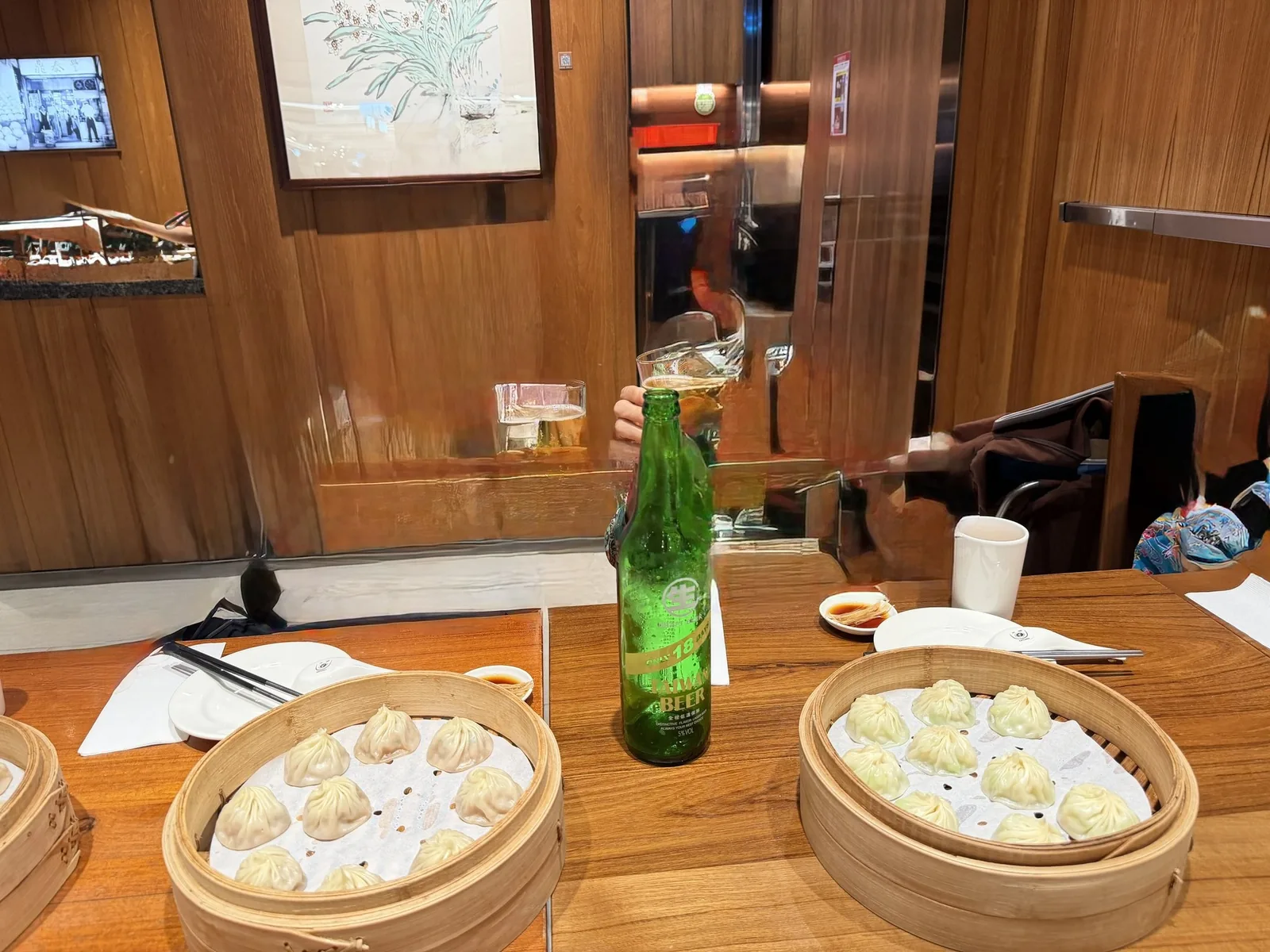
16:40 Back to the hotel for a nap (this is what made it work)
After eating, we walked back to the hotel and rested in the room. We went out again at 19:10.
This midday break is why Day 3 held together. A night market comes alive at night, and the trip back is after 23:00. If you do not put a rest into the plan first, both the grandparents and the children run out in the second half.
We chose a hotel right by Taipei Station partly to make this “go back once” easy.
Choose a hotel where you can “go back at midday”
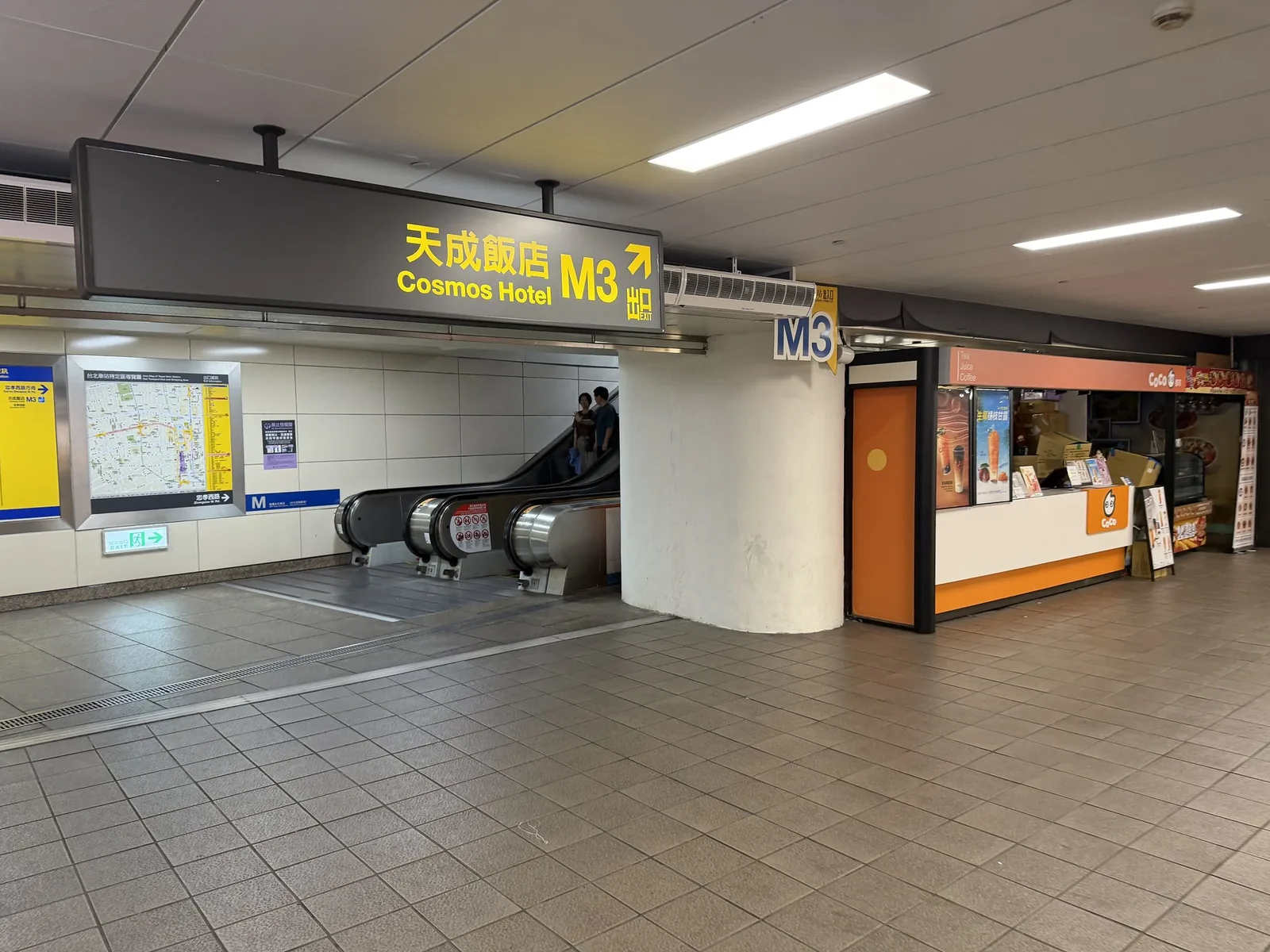
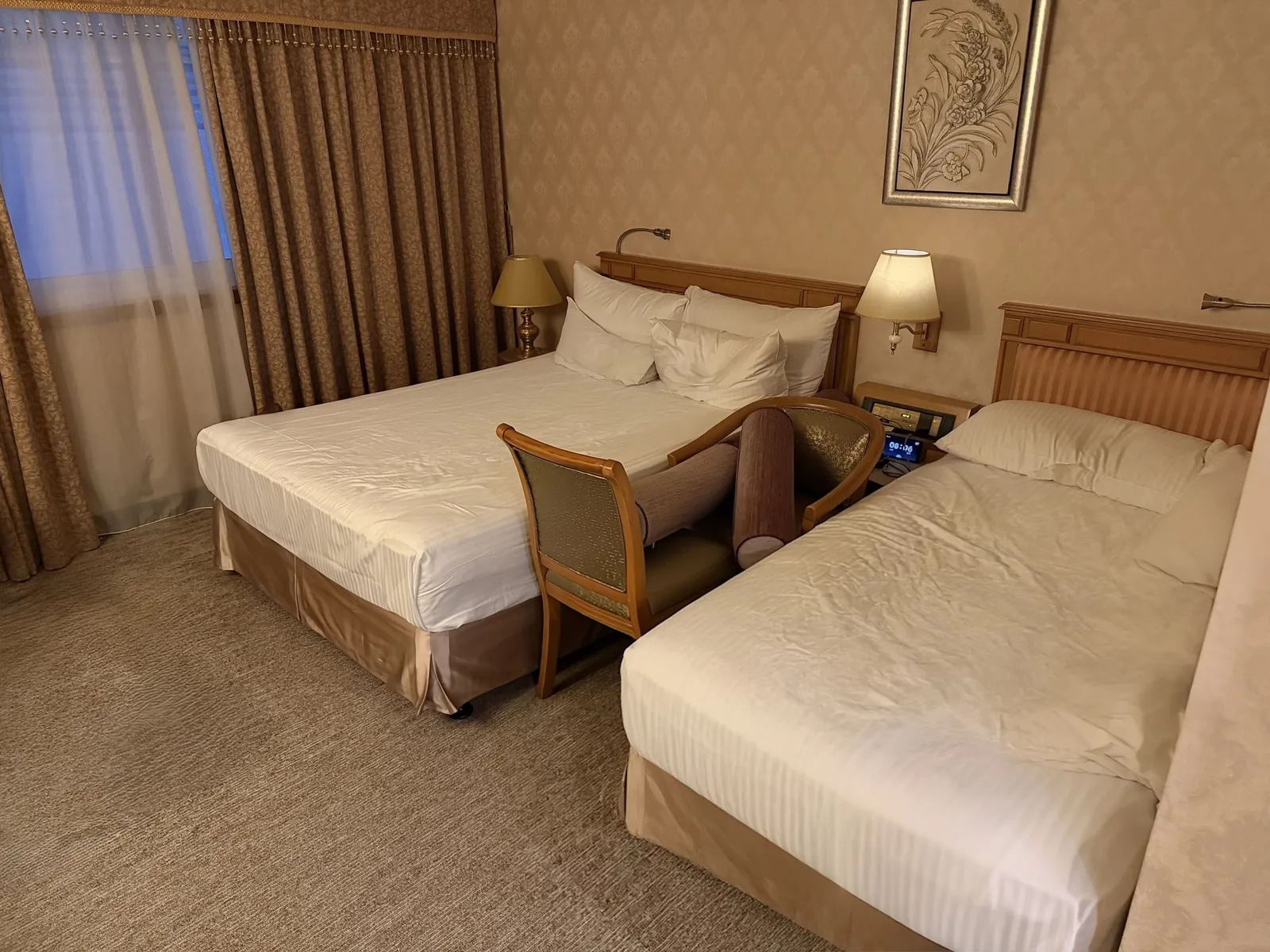
We stayed at Cosmos Hotel Taipei (天成大飯店). It is directly connected to Taipei Station, and we took two rooms, each with one semi-double bed and one single bed, with three people in each. Which one is cheaper changes depending on the dates, so we looked at both before deciding.
Affiliate links. Booking through this site does not change the price. Details on the rooms, breakfast and amenities are here.
And this “location you can go back from” also pays off on the last day.
19:40 Shilin Night Market. Secure a place where six people can sit first
We took the MRT Red Line to Jiantan Station. The night market is right in front of the station.
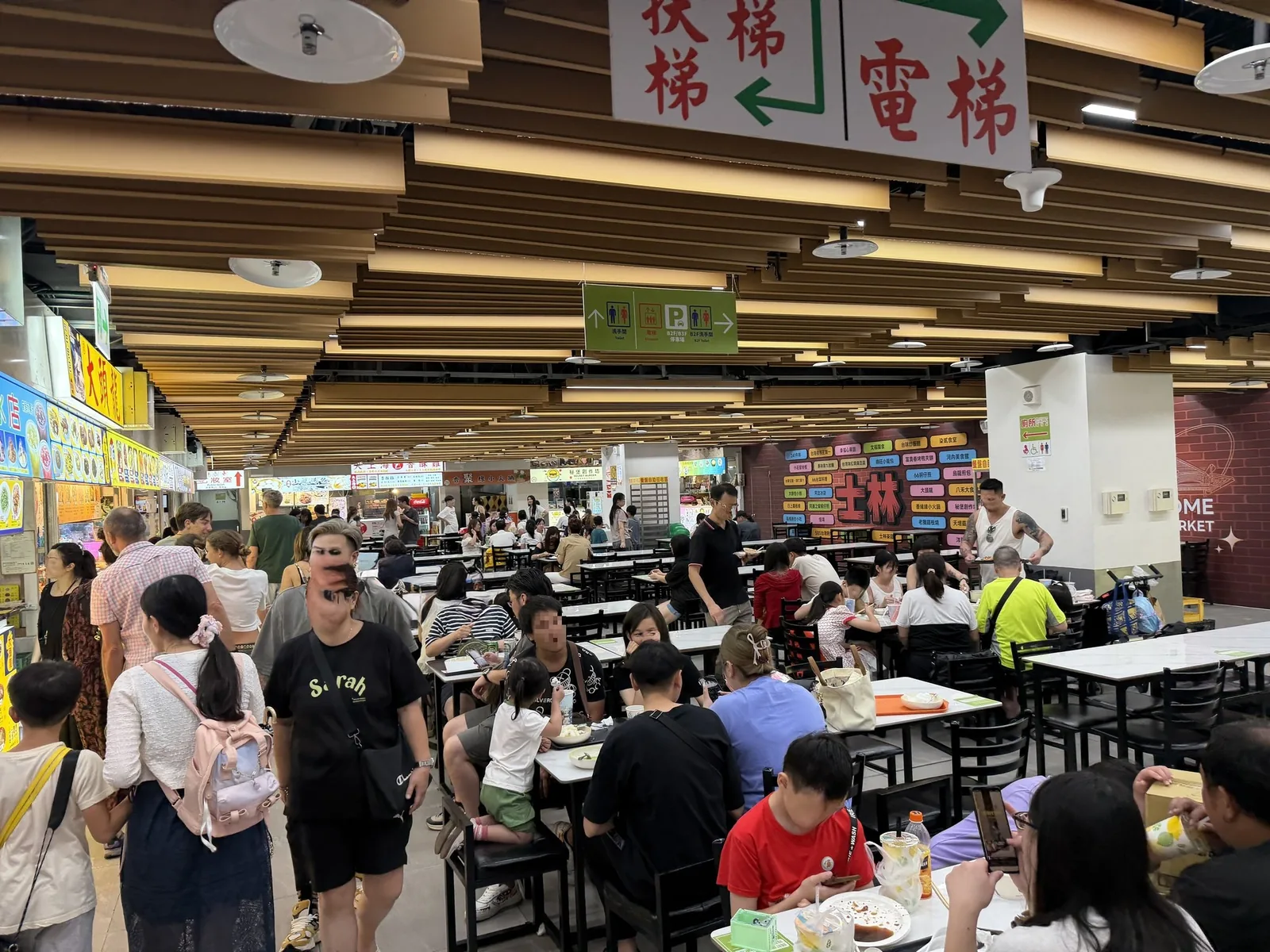
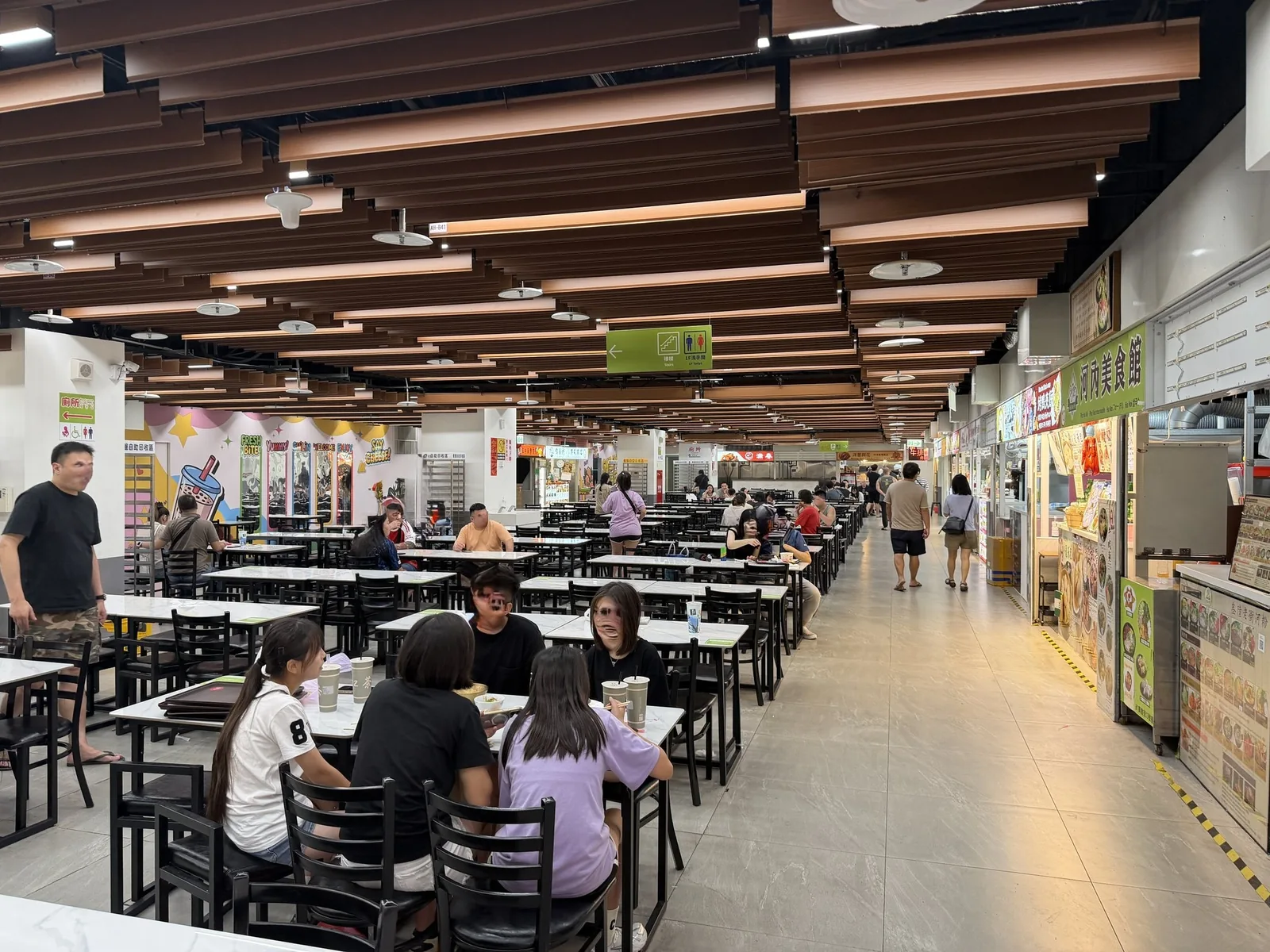
First we had mango shaved ice at Xinfating (辛發亭). After that, we had the grandparents and the children wait in the basement food court, “B1 food area,” while we went around buying food.
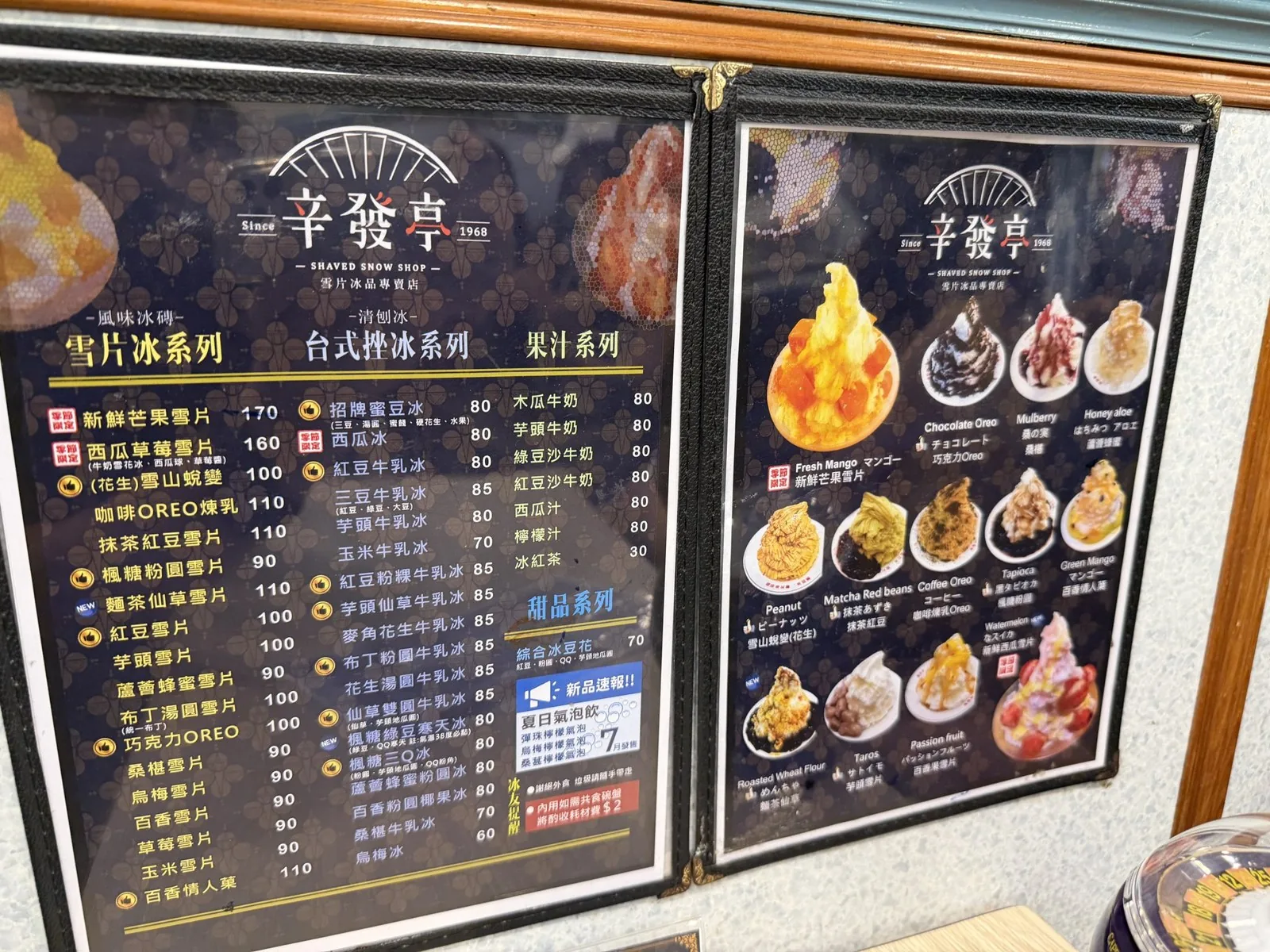
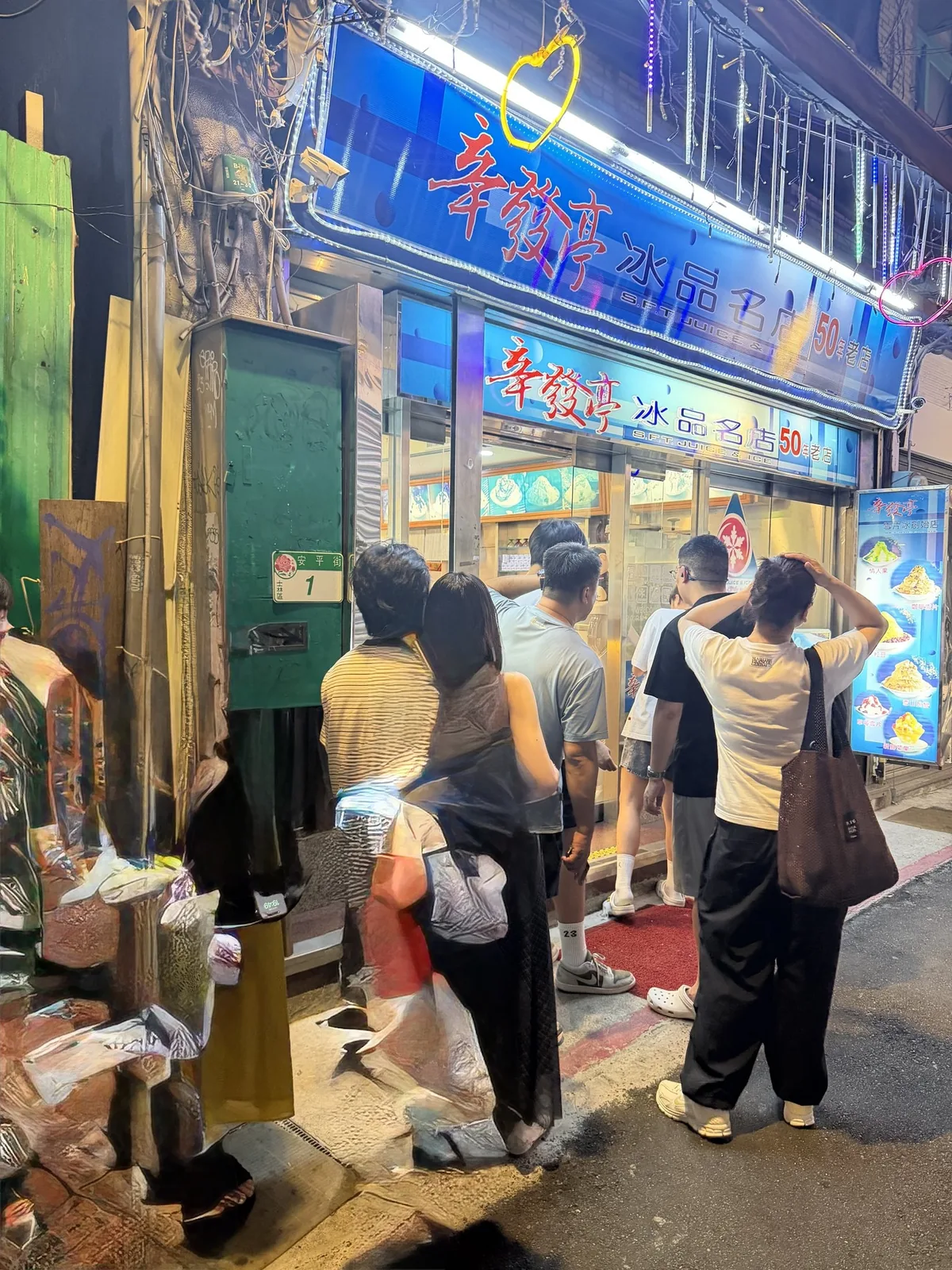
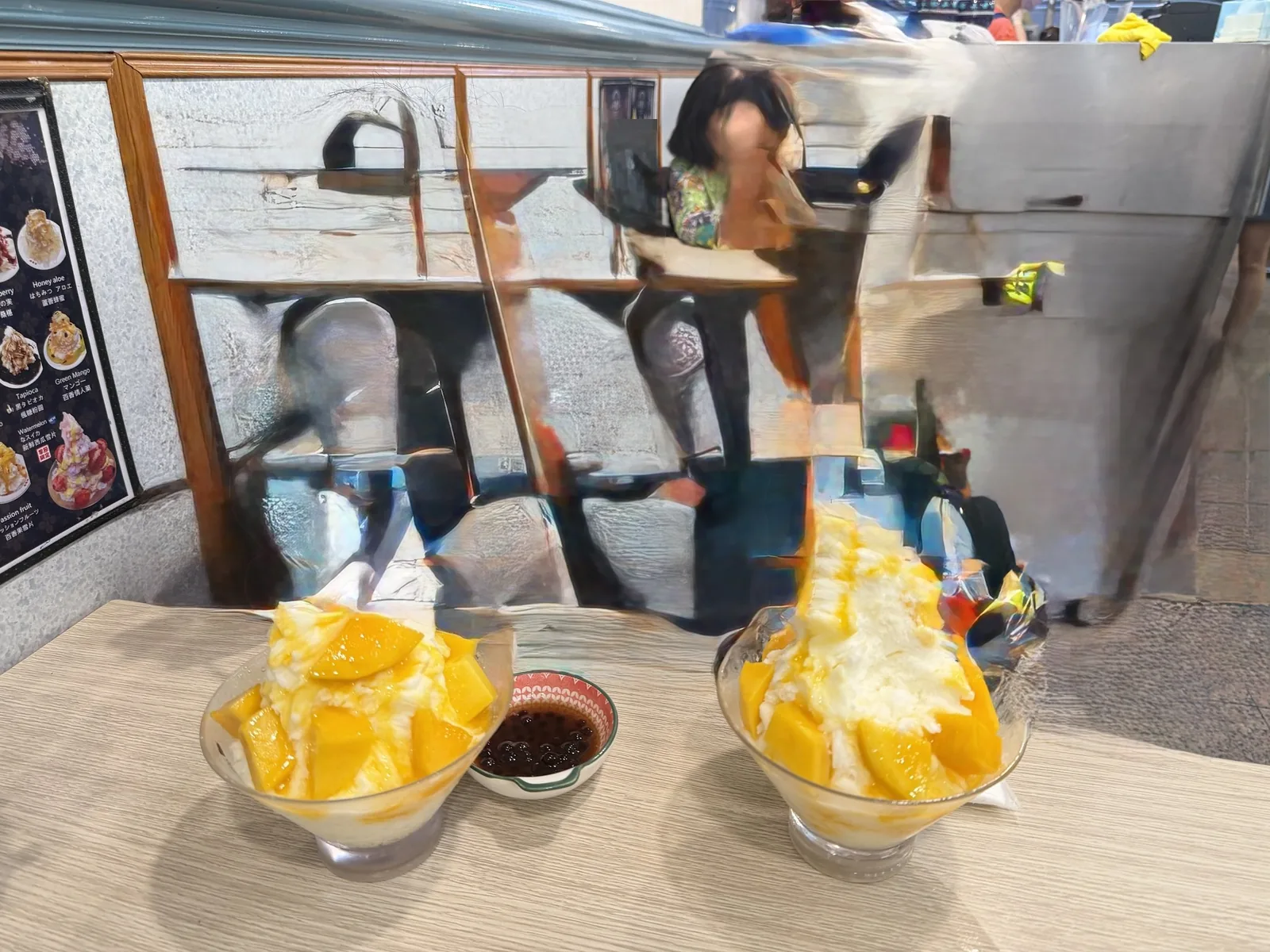
What we ate at Shilin Night Market
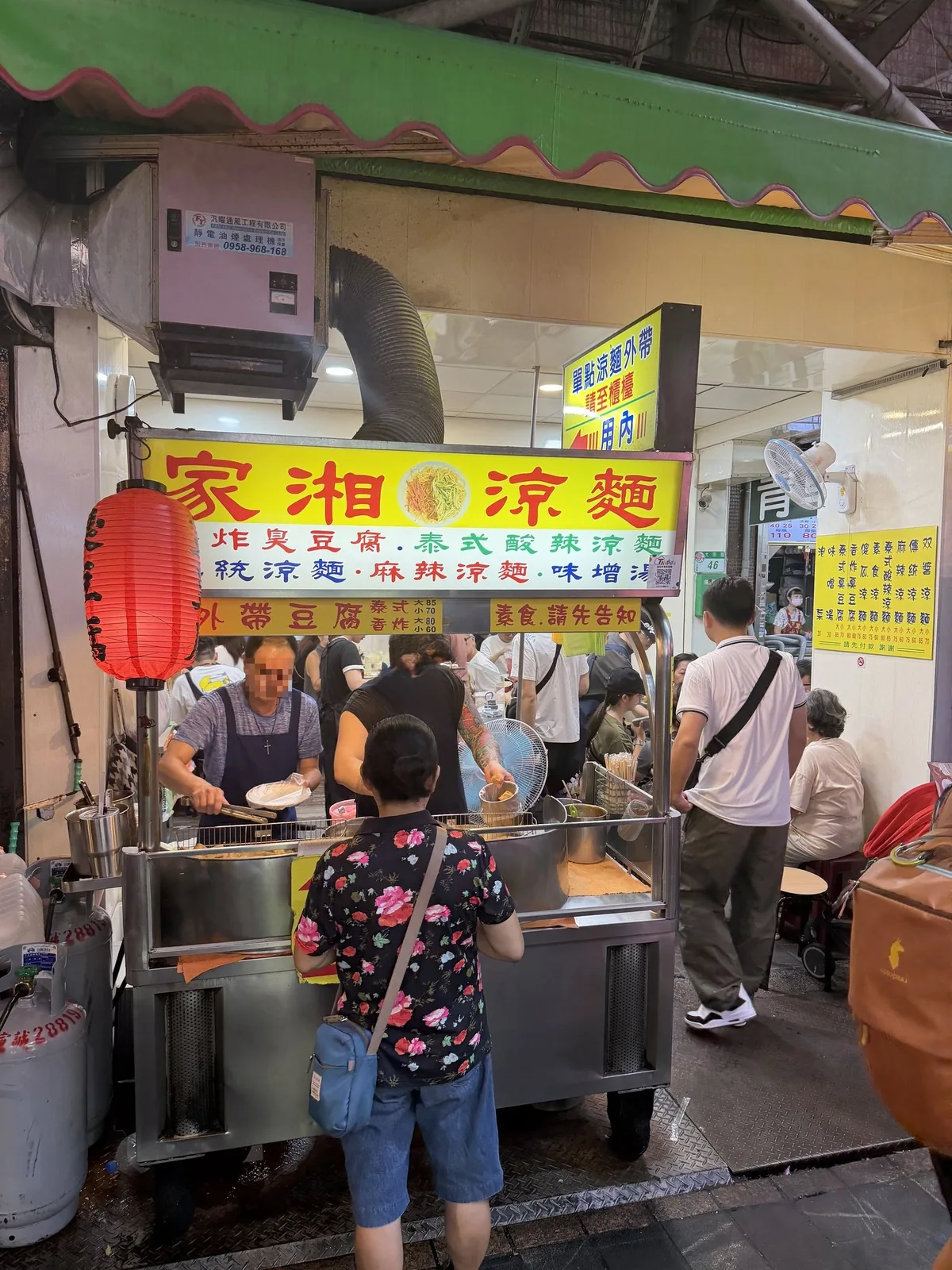
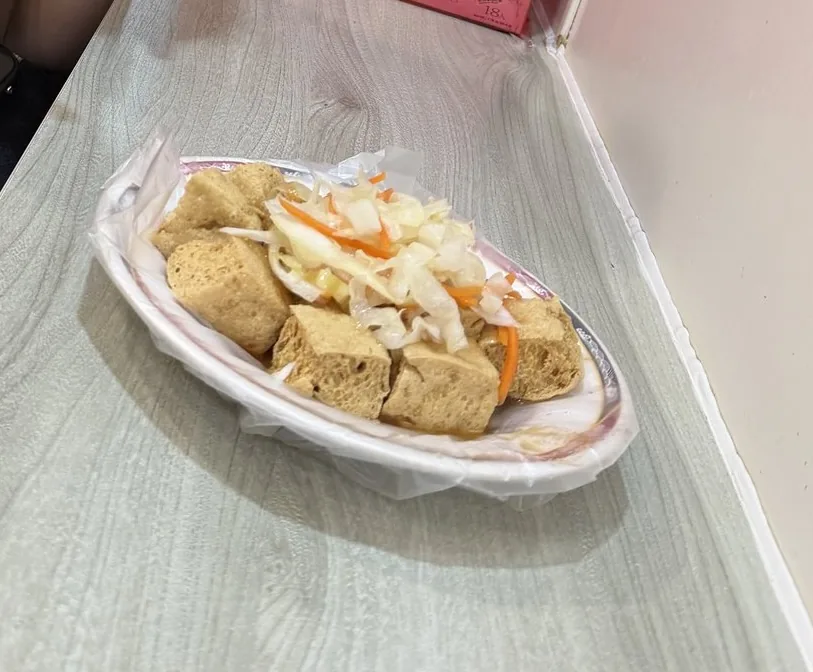
- The stinky tofu from Jiaxiang Liangmian (家湘涼面). Theirs is fried, so the smell did not bother us, and it went well with the sweet and salty sauce
- Fuzhou Shizu Pepper Bun, Shilin branch (福州世祖胡椒餅). We chose pork. It was a favorite of the grandparents and the children, and we went back to buy more. At first we split one between two people, but you can eat one each
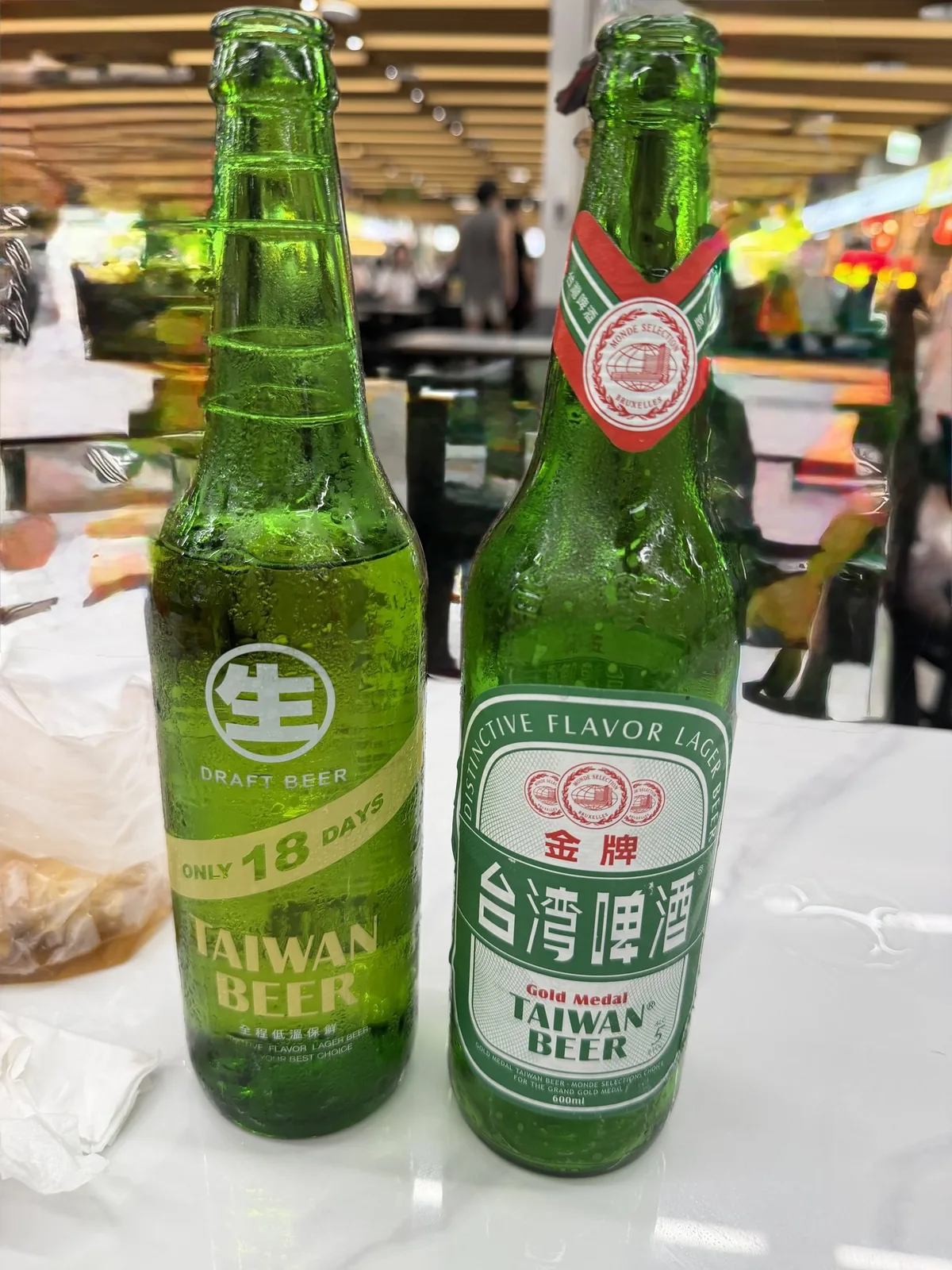
- In the food court we compared 18 Days Taiwan draft beer (18天台湾生ビール) (a draft beer with a shelf life of only 18 days) and Taiwan Beer
We took everything to go and ate together, all six of us, in the food court. If six people walk around the stalls, someone always gets kept waiting.
Securing seats first and splitting up just the buying was easier with three generations. Sitting somewhere cool also counts for a lot.
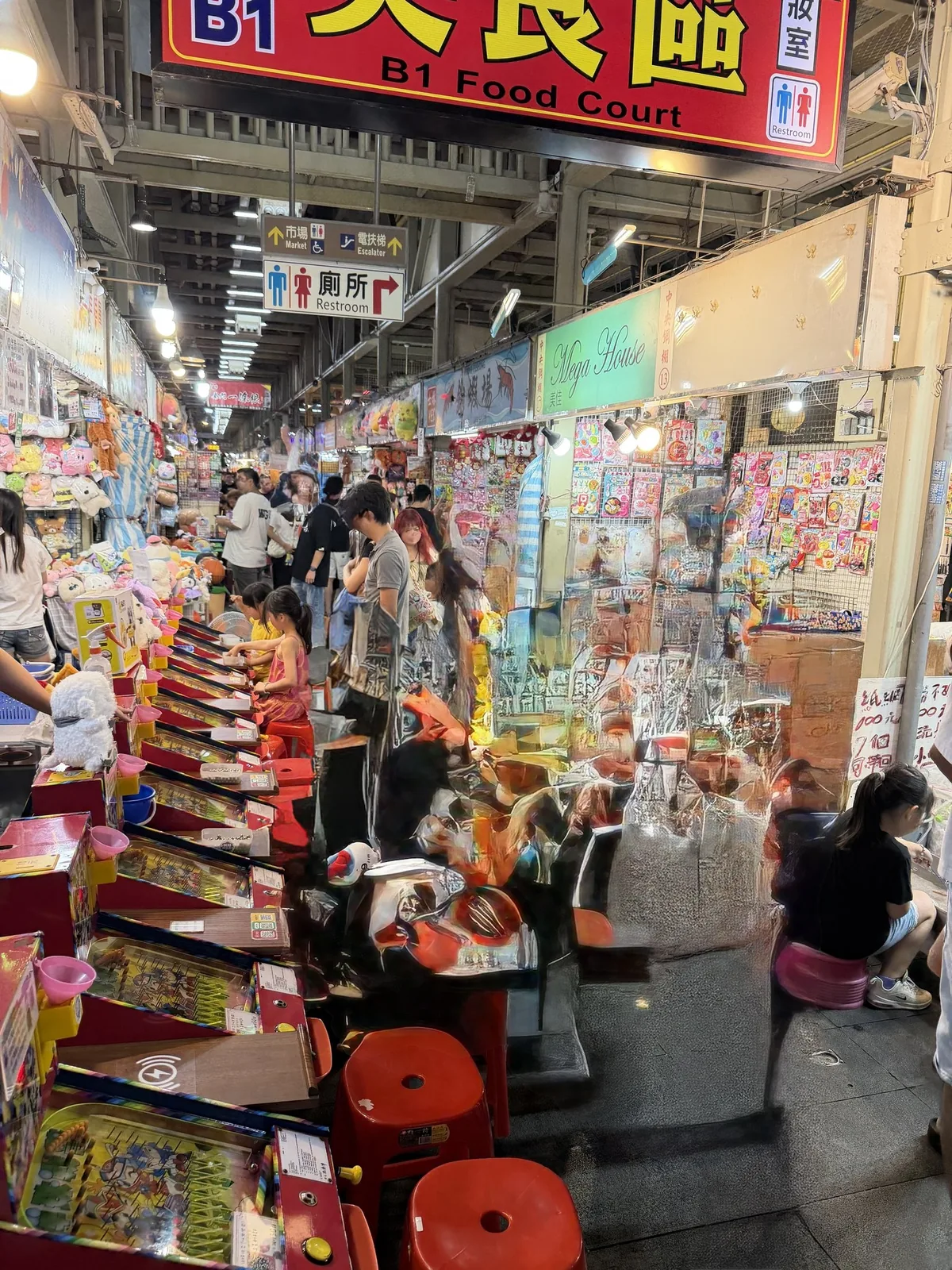
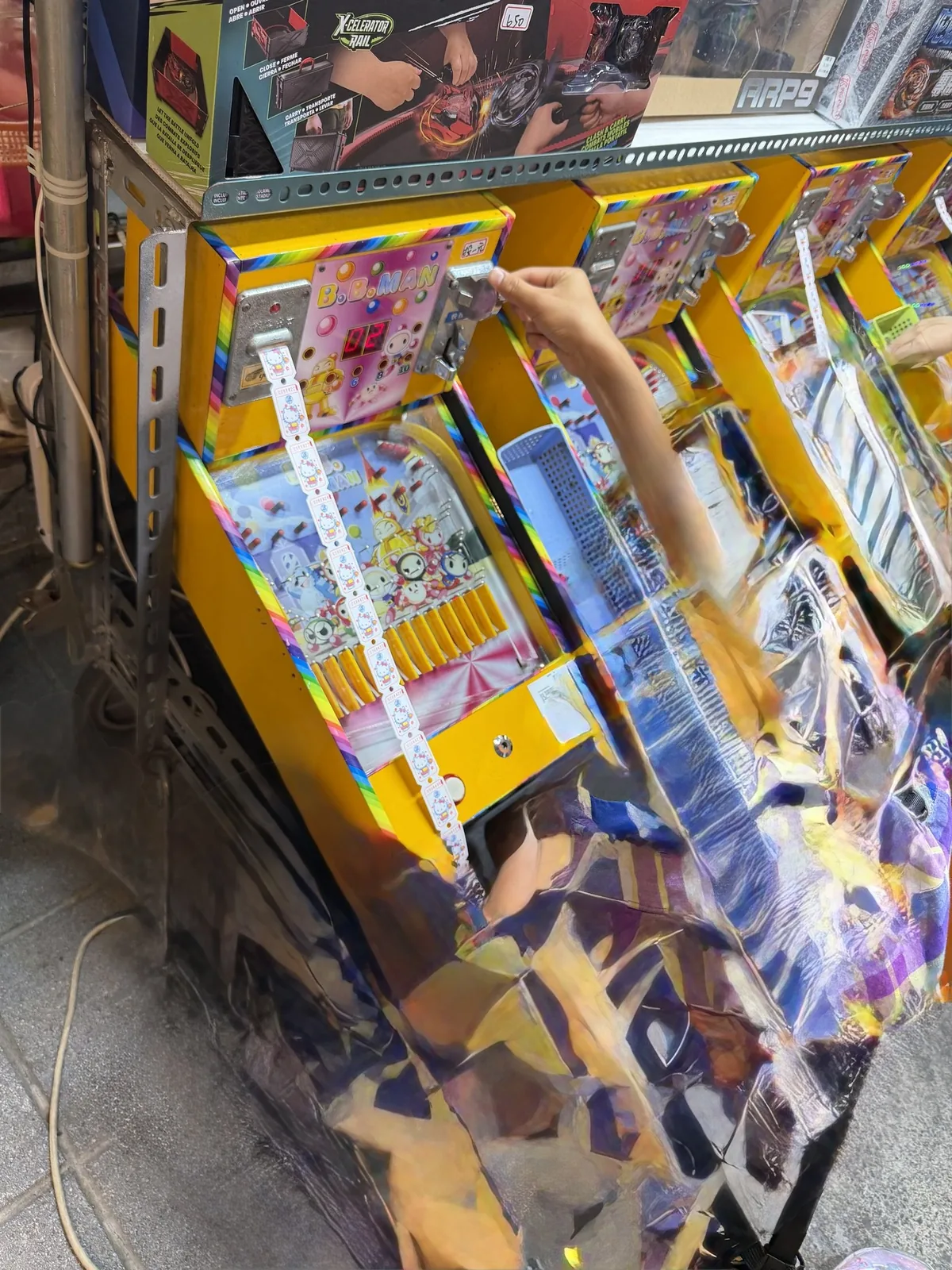
Back above ground, the children played the stall games. We ran out of time for shrimp fishing. What they got absorbed in instead was the game machines lined up beside the B1 entrance.
For about JPY 500 you can play for quite a long time. They are also built so that it is easy to win, and in the end they got a prize.
When you think of night market games you picture one-shot shooting galleries, but this is a game that fills time. It was a help that the children did not get bored while the adults finished eating. We took the 23:10 MRT back to Taipei Station.
Day 4: Longshan Temple and souvenirs, making the 15:30 flight
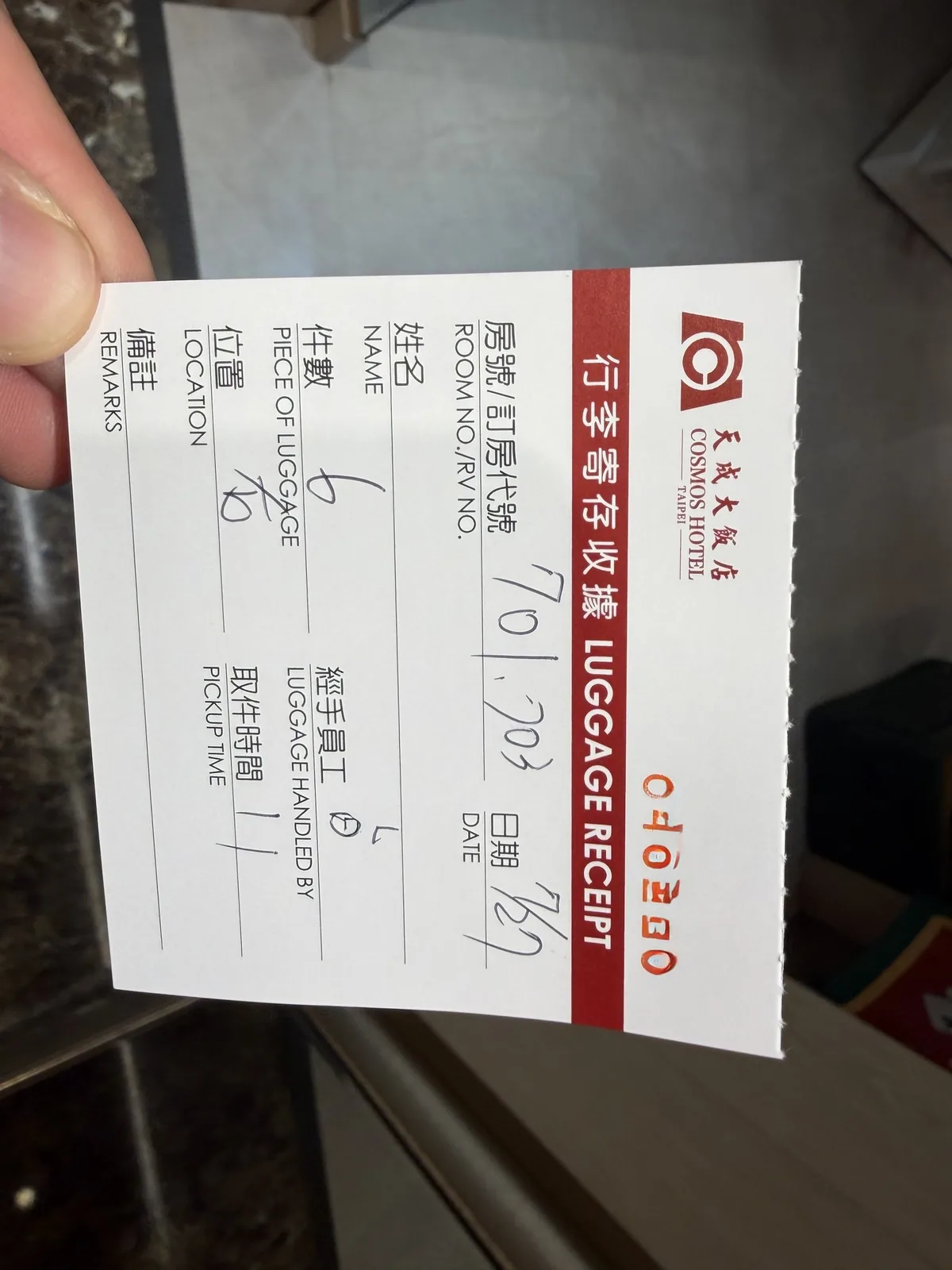
Breakfast at 7:00. We checked out at 9:50 and left our luggage at the front desk. You say “we will be back at 11:00” and get a claim slip.
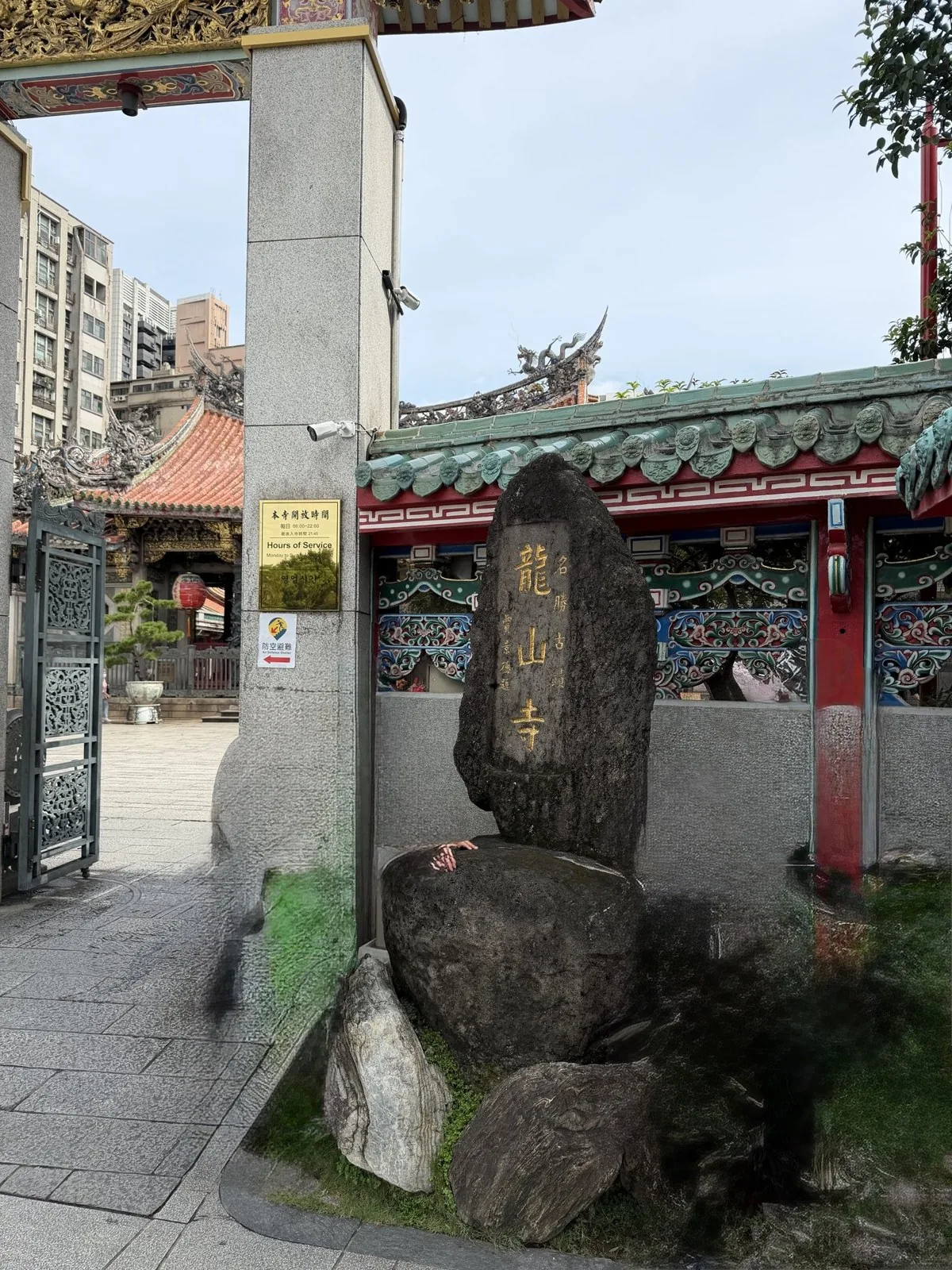
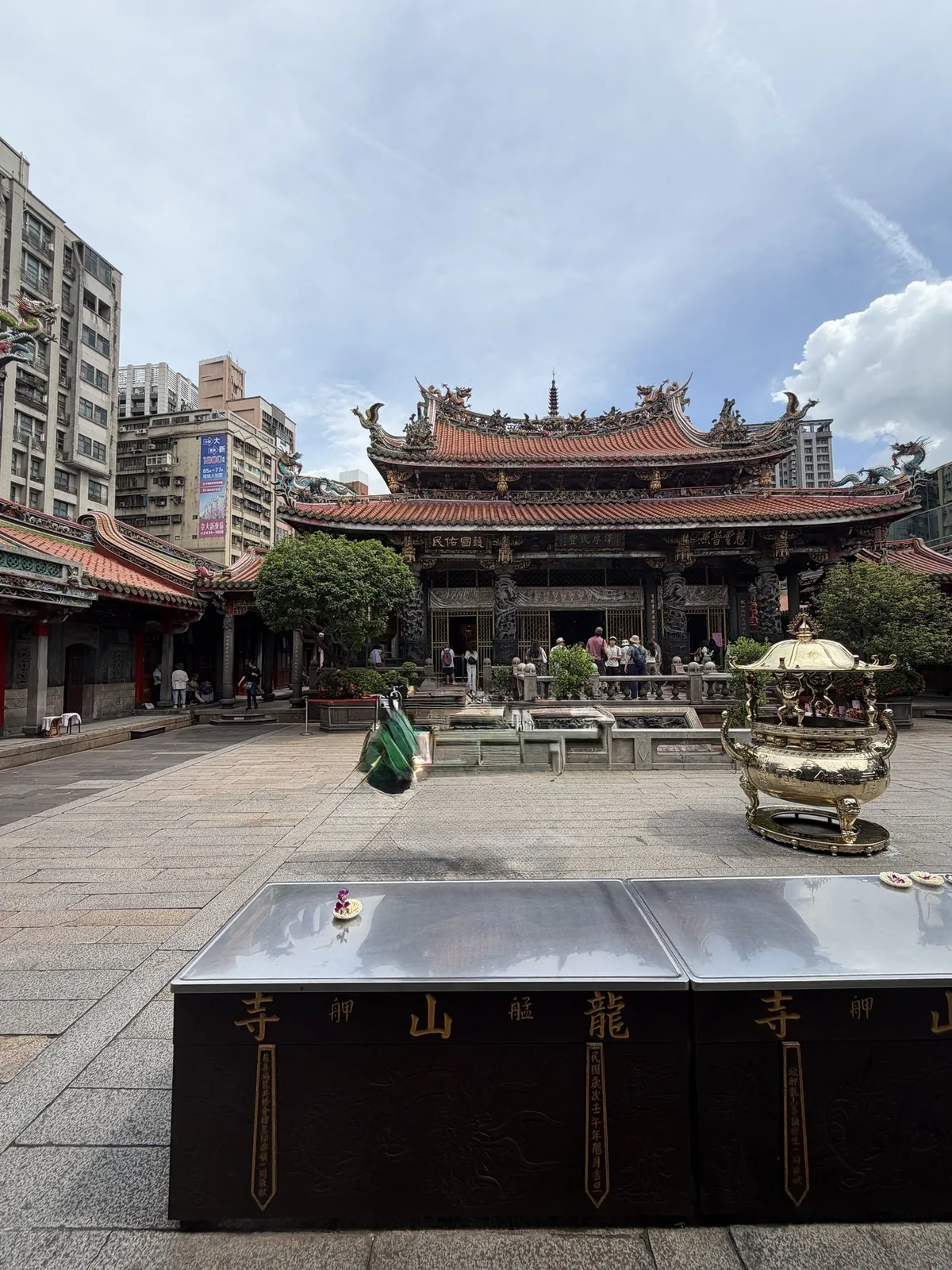
For the last day we chose Longshan Temple. It is a short train ride from the hotel and opens early in the morning. We could fit it in without strain even in the morning of the day we flew home.
The deciding factor was that you can predict the time. On a day when the flight time is fixed, I do not want to go somewhere where the travel time is hard to predict.
In that respect, a temple that is close to the station and where you decide how long to stay yourself suits the last day. Because the fortune slips give you something to “do,” even a short stay does not leave you feeling it was not enough.
At 10:10 we took the train to Longshan Temple. The fortune slips here do not end with just drawing one, as in Japan.
You throw two red crescent-shaped wooden blocks onto the floor. If one lands face up and the other face down, that is the sign that “you may draw,” and only then can you draw a fortune slip. If both land the same side up, you cannot.
I threw three times and failed all three times. In the end I never got to draw one.
This mechanism of “you cannot draw until you throw” seemed to be like a game and fun for the children. When we read the slip we did get, using Google Translate, it described the child’s character so accurately that we were surprised.
After that we picked up the souvenirs we had forgotten to buy in the underground mall of Taipei Station and under Q Square behind the station.
At 12:00 we collected our luggage at the hotel and took the direct train (express) of the Taoyuan Airport MRT to the airport. We arrived at 13:00, checked in, and flew home on the 15:30 flight.
On the last day, a hotel directly connected to Taipei Station pays off. You leave your luggage and go out empty-handed, then come back and board the airport train straight away, so your estimate of the time does not fall apart.
Having no transfers also matters a lot. The Taoyuan Airport MRT goes from Taipei Station by direct train, in one ride.
We only walked with suitcases for the few minutes from the hotel to the station. There was not a single moment on this trip when we had to change trains carrying luggage for six. That is what you most want to avoid with three generations, so I think the hotel’s location decides how heavy the last day is.
3 days in Taipei with kids and seniors: with a midnight arrival, our 4 days were really 2.5
We went for 3 nights and 4 days, but on the first day we landed at 23:55 and on the last day we flew out at 15:30. We could use only two full days. The first day was just travel and sleep, and on the last day there was only the morning. In practice it is almost the same as 2 nights and 3 days.
So if you can get a flight that lands in the morning, I think you can put it together in 2 nights and 3 days. However, this is a way of putting it together that we did not do ourselves. What we actually did was 3 nights and 4 days, and rearranging from the time each stop took gives this.
Rearranged plan (what we actually did was 3 nights and 4 days)
- Day 1 (morning arrival) Leave luggage at the hotel → National Palace Museum → Shilin Night Market
- Day 2 Sky lanterns at Shifen → Taipei Zoo → Ningxia Night Market (the grandparents go back to the hotel first)
- Day 3 Longshan Temple → shopping around Taipei Station → airport
The reason you can group the Palace Museum and Shilin Night Market on the first day is that both are in the north of Taipei and the route connects. We did these two on Day 3, but the order can be swapped.
Note
Watch out for Day 2. Putting Shifen and the zoo into one day is something we actually did. But from Shifen to the zoo is 50 minutes by taxi. It assumes a slow morning and resting in the car.
It is decided by takeoff and landing times, not the number of days
If you build it in 2 nights and 3 days, choose the earliest possible flight on the way out and the latest possible flight on the way back. Even with the same 2 nights and 3 days, arriving in the morning and leaving at night adds half a day each.
Conversely, with a midnight arrival and a midday departure like ours, even 3 nights and 4 days gives you only two and a half days of movement. It is decided not by the number of days but by the takeoff and landing times. When you choose your tickets, look at the times along with the price.
Even so, the reason we made it 3 nights and 4 days was that we could get the late-night flight cheaply, and that we wanted room for a midday break.
Being able to go back to the hotel on the evening of Day 3 was also because we had room in the schedule. It is decided by which you put first: the flight times or the grandparents’ stamina.
4 days in Taipei with grandparents and kids: a model course that does not wear anyone out
How we planned it so no one got worn out
- Head out in the 10 o’clock hour in the morning. Eat breakfast, get ready in the room, then move. On Day 2 and Day 3 we left at 10:20–10:30
- On days you go out at night, put in a time to go back and rest first. That was 16:40–19:10 on Day 3
- Plan on splitting up partway. At 20:00 on Day 2, only the grandparents went back to the hotel first
- For six people, a taxi is the basic choice. One six-seater is shared by everyone, so the cost per person stayed small. Use the train only for stretches where the train is faster, where you can get on right away, or at times when you cannot predict traffic: I should have thought in that order. Making the grandparents stand on the Pingxi Line and the Palace Museum bus is what we regret about this trip
- Secure seats first. At night markets, if you split up the buying, no one is left waiting
Why we dropped Jiufen for the zoo, how the heat at the end of July was, and how much it cost are written in the cost of 3 nights and 4 days in Taipei, and what we learned going with three generations (in Japanese).
The hotel we stayed at on this itinerary
Cosmos Hotel Taipei (天成大飯店). It is directly connected to Taipei Station, and being able to go back and rest at midday was the premise of this itinerary. The six of us took two rooms with two beds each, three people in each.
Affiliate links. Check the price on each booking site. Booking through this site does not change the price.
Official sites for the places on this itinerary
Opening hours, closing days and operating information change. Check the official site before you leave.
- Taipei Zoo (official, English)
- National Palace Museum (official)
- Din Tai Fung (official)
- Longshan Temple (official)
- Shilin Night Market (Taipei travel site)
- Ningxia Road Night Market (Taipei travel site)
- Taiwan Railway (TRA) timetable and booking (official)
- Taoyuan Airport MRT (official)
- EasyCard (official, English)
Related articles
- Cosmos Hotel Taipei Review: Two Family Stays at Taipei Main Station
- Cosmos Hotel Taipei Breakfast Buffet: Every Item, Hours and Crowds
- Scoot Airlines Review: Taipei Twice with Kids and Grandparents
- Taipei 3-night, 4-day cost: JPY 281,000 for four, JPY 597,000 for six across three generations (in Japanese)
- How to make a three-generation trip work (in Japanese)
- Overseas destinations that grandparents and grandchildren can enjoy: Taiwan, Cebu, Hong Kong and Guam compared (in Japanese)
- mikizin in English: all English pages